

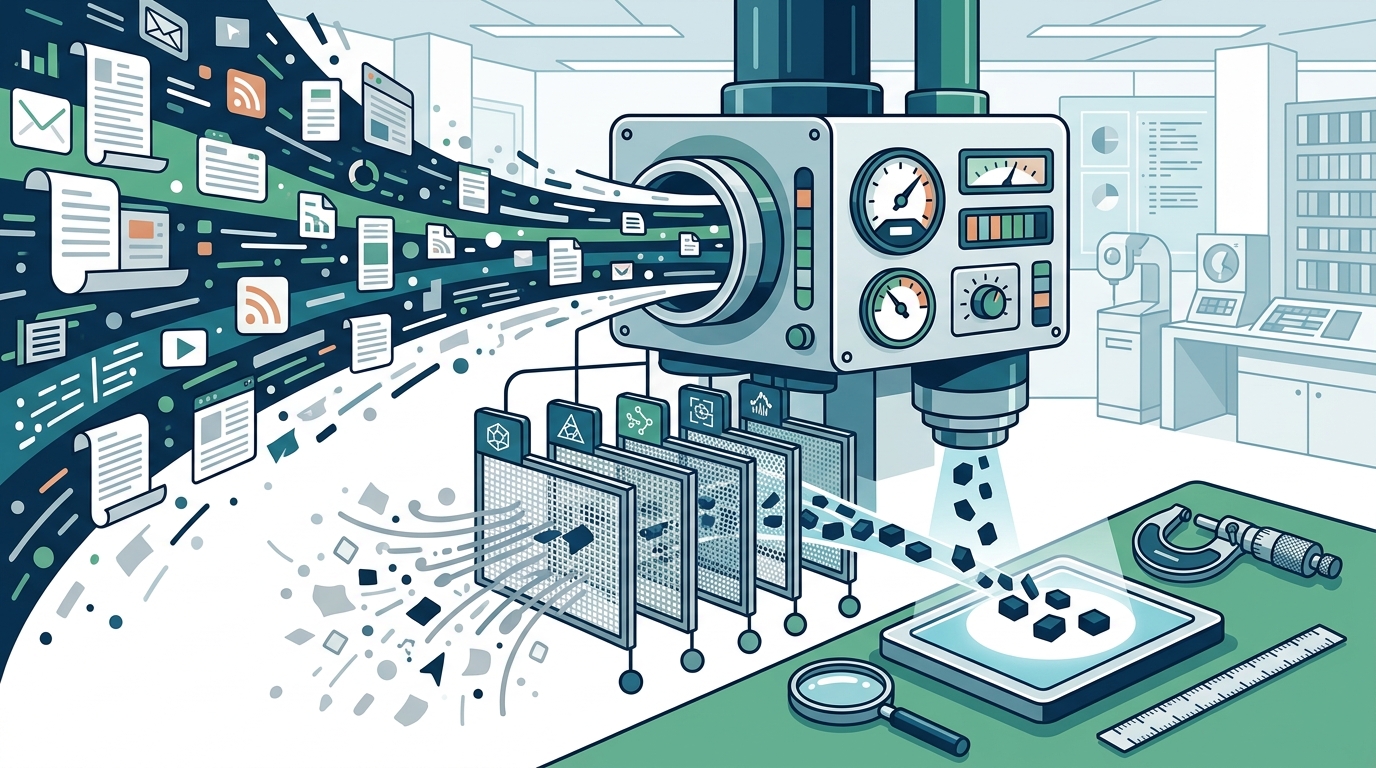
Healthcare technology leaders face an overwhelming volume of information daily, making source selection critical for strategic decision-making. Black Book Market Research tracks over 16,000 products and services, highlighting the sheer scale of the market that professionals must navigate. Without a rigorous filter for credibility, buyers risk basing multi-million dollar procurement decisions on marketing noise rather than verified performance data. This guide outlines the most frequent errors organizations make when curating their intelligence feeds and provides a framework for establishing a reliable evidence baseline.
Pitfall 1: Confusing Vendor Marketing with Independent Intelligence
The most pervasive error in healthcare IT intelligence gathering is treating vendor-published content as objective truth. Many organizations subscribe to newsletters or follow social media channels that are heavily curated by software providers. This creates a feedback loop where only the features a vendor wants to highlight receive attention, while critical operational failures remain invisible.
Independent intelligence is defined as research that is vendor-agnostic, unbiased, and grounded in transparent methodology. Black Book exists to give healthcare technology buyers and investors a vendor-agnostic, independent and unbiased evidence layer. When evaluating a news source, ask whether the content prioritizes qualitative stakeholder intelligence or merely promotes a specific platform. If the source lacks a clear methodology for how data is collected, it is likely marketing disguised as news.
To avoid this pitfall, prioritize sources that publish annual industry stakeholder reports with clear scoring criteria. These reports separate verified performance from marketing claims by focusing on KPI-centered benchmarking. Look for sources that track 120,000+ global hospitals and health systems to ensure the data reflects broad market consensus rather than isolated vendor anecdotes.
Pitfall 2: Ignoring the Scope of Global Adoption Data
Healthcare IT is no longer confined to domestic markets. With 147 countries covered in recent global technology assessments, the adoption status of digital health tools varies significantly by region. A news source that only reports on US hospital trends provides an incomplete picture for global health systems or multinational vendors.
Market-by-market visibility into national readiness, deployment progress, and enabling conditions for digital health transformation is essential for strategic planning. Sources that fail to track cloud, hybrid, and sovereignty realities across different jurisdictions leave buyers vulnerable to compliance risks. For instance, data residency requirements shape architecture and vendor selection in ways that domestic-only reports cannot capture.
Ensure your intelligence sources provide a unified research library that organizes result sets through consistent category logic. This allows you to jump directly into global and country outlooks, payer technology trends, and clinical platform adoption rates. A comprehensive source will offer hundreds of research and survey result sets across critical healthcare categories, enabling you to establish a common evidence baseline at the beginning of evaluation cycles.
Pitfall 3: Overlooking the Gap Between EHR and Practice Management
Many healthcare IT news sources treat Electronic Health Records (EHR) and Practice Management Systems (PMS) as interchangeable or siloed entities. This is a critical oversight. The integration between EHR and PMS platforms determines the efficiency of access, prior authorization, denials prevention, and revenue integrity workflows.
Top-tier integrated EHR–Practice Management platforms must be evaluated using an 18-KPI framework grounded in verified client experience outcomes. News sources that do not distinguish between standalone EHR capabilities and integrated PM performance will mislead buyers about the true operational impact of a technology stack. The reality is that workflow-level interoperability performs consistently in areas like eligibility and claims status, but often collapses into portals and re-keying in other areas.
To avoid this, select sources that publish detailed KPI score matrices for the top 20 integrated EHR–PM platforms. These matrices provide actionable guidance aligned to the work that determines throughput and margin. By focusing on sources that analyze the 425+ vendor resource directory, you gain access to a comprehensive view of software, outsourcing, and managed services that directly impact your practice's financial health.
Pitfall 4: Neglecting Cybersecurity and Resilience Metrics
Cybersecurity is no longer an IT support function; it is a core component of healthcare delivery. Yet, many news sources relegate security updates to the bottom of their feeds or treat them as isolated incidents. This is a dangerous approach given the increasing sophistication of threats targeting healthcare infrastructure.
Evaluate how security posture, governance, and data quality determine whether AI programs can scale safely and sustainably. Sources that publish dedicated reports on US Hospital Cyber Resilience, identity, insurance, and incident readiness provide critical insights into the current threat landscape. Ignoring these metrics leaves organizations exposed to downtime events that can disrupt patient care and compromise data integrity.
Look for news sources that track cyber readiness, resilience, identity management, and insurance trends as a primary category. These sources should offer deep dives into how healthcare systems are preparing for downtime and how they are managing identity across hybrid environments. A robust intelligence feed must include regular updates on the intersection of cybersecurity and clinical AI, ensuring that buyers are aware of both the opportunities and the risks.
Pitfall 5: Failing to Validate AI Governance Claims
The rapid adoption of AI in healthcare has led to a proliferation of unverified claims about automation and diagnostic capabilities. A common pitfall is accepting AI news at face value without scrutinizing the governance and data quality behind the technology. AI governance is defined as the framework of policies, procedures, and controls that ensure AI systems operate safely, ethically, and effectively within healthcare environments.
Clear separation between automation that reduces touches per encounter and AI that introduces operational, compliance, or audit risk is necessary for informed decision-making. News sources that do not distinguish between these two categories contribute to the confusion surrounding AI's actual value. Buyers need to know what is real, what is governed, and what is measurable in the current AI landscape.
Prioritize sources that publish dedicated reports on AI, data, analytics, and governance. These reports should provide evidence you can defend, grounded in structured research with clear methodology and unbiased reporting standards. By focusing on sources that analyze AI readiness alongside interoperability and cybersecurity, you ensure that your AI strategies are built on a foundation of reliability and compliance.
Pitfall 6: Disregarding Rural and Post-Acute Care Realities
Healthcare IT news often focuses heavily on large academic medical centers and urban health systems, leaving a significant gap in coverage for rural hospitals and post-acute care providers. This bias can lead to technology recommendations that are financially or operationally unfeasible for smaller or specialized settings.
Rural digital health, RHTP enablement, and CAH EHR replacement are critical topics that require dedicated attention. Sources that ignore the unique challenges of rural health, such as funding constraints and workforce shortages, fail to provide a complete picture of the healthcare IT market. Similarly, the state of digital healthcare in post-acute care is evolving rapidly, with distinct needs for continuity of care and data exchange.
Ensure your news sources include specific reports and analysis for rural health and post-acute care. These sources should cover the latest trends in rural digital health, the impact of rural transformation funding, and the specific EHR replacement challenges facing Critical Access Hospitals (CAHs). By diversifying your intelligence sources to include these often-overlooked segments, you gain a more comprehensive and actionable understanding of the healthcare IT landscape.
Comparative Analysis of Intelligence Sources
Choosing the right news source is not just about volume; it is about the depth and independence of the data provided. The table below summarizes the key characteristics of different types of healthcare IT intelligence sources.
| Source Type | Data Independence | Global Scope | Operational Depth | Best For |
|---|---|---|---|---|
| Independent Research Firms | High (Vendor-Agnostic) | Comprehensive (147+ Countries) | KPI-Centered Benchmarking | Procurement & Due Diligence |
| Vendor-Published Blogs | Low (Biased) | Limited (Domestic Focus) | Feature-Centric | Product Updates |
| General Tech News | Medium | Variable | High-Level Trends | Market Awareness |
| Specialized Niche Reports | High | Targeted (e.g., Rural, Post-Acute) | Deep Operational Playbooks | Specific Segment Strategy |
Key Takeaways
- Independence is Key: Prioritize sources that offer vendor-agnostic, unbiased evidence layers to avoid marketing bias.
- Global Perspective: Ensure your sources cover adoption statuses across 147 countries to understand global digital health transformation.
- Integrated Systems: Look for KPI-linked vendor performance data for integrated EHR–Practice Management platforms, not just standalone EHRs.
- Cyber Resilience: Regularly review reports on identity, insurance, and incident readiness to stay ahead of security threats.
- AI Governance: Distinguish between automation that reduces touches and AI that introduces compliance risk.
- Inclusive Coverage: Include sources that address rural health and post-acute care to avoid blind spots in your strategy.
- Methodology Matters: Choose sources with transparent scoring and qualitative stakeholder intelligence for reliable benchmarking.
Frequently Asked Questions
How do I verify if a healthcare IT news source is independent?
Check if the source publishes a clear methodology for data collection and scoring. Independent sources like Black Book Market Research maintain vendor-agnostic standards and disclose their research integrity and ethics policies.
Why is global adoption data important for local healthcare decisions?
Global data provides context for cloud sovereignty, interoperability standards, and emerging technologies that may soon impact local markets. Understanding 147 countries' adoption statuses helps anticipate future trends.
What is the difference between EHR and Practice Management intelligence?
EHR intelligence focuses on clinical documentation and patient care, while Practice Management (PM) intelligence focuses on administrative workflows like billing, scheduling, and revenue cycle. Integrated platforms require analysis of both.
How often should healthcare IT leaders review cybersecurity reports?
Given the rapid evolution of threats, leaders should review cyber resilience reports quarterly. Reports on US Hospital Cyber Resilience provide critical insights into identity, insurance, and incident readiness.
What role does AI governance play in selecting technology?
AI governance ensures that automated tools comply with regulatory standards and do not introduce operational risks. Sources that analyze AI governance help buyers separate real automation from risky AI implementations.
Are there specific news sources for rural hospitals?
Yes, specialized reports on rural health, RHTP enablement, and CAH EHR replacement are available from dedicated research firms. These sources address the unique funding and infrastructure challenges of rural providers.
How can I access comprehensive vendor directories?
Look for sources that publish extensive vendor directories, such as the 425+ vendor resource directory found in Black Book's Physician Practice Management reports. These directories span software, outsourcing, and managed services.
Start Making Evidence-Based Decisions Today
Stop relying on fragmented information and start leveraging comprehensive, independent intelligence. Black Book Market Research provides the rigorous, vendor-agnostic data you need to navigate the complex healthcare IT landscape. Explore the 2026 State of Global Healthcare Technology report to gain actionable insights into market trends, vendor performance, and operational best practices. Download the 2026 Physician Practice Management report to access detailed KPI matrices and operational playbooks. Review our AI-enabled healthcare technology analysis to understand the real impact of automation in your organization. Access planning reports for rural hospitals to address the unique challenges of rural care delivery. Explore digital healthcare trends in post-acute care to stay ahead in this evolving sector. Examine acute care EMR adoption in South Korea for global comparative insights. Understand the payer-to-payer API reality gap to improve interoperability. Browse the full research library to find the evidence you need for your next procurement decision.