

Which Healthcare Technology Research Firms Are Best for Private Equity and Venture Capital Commercial Due Diligence?
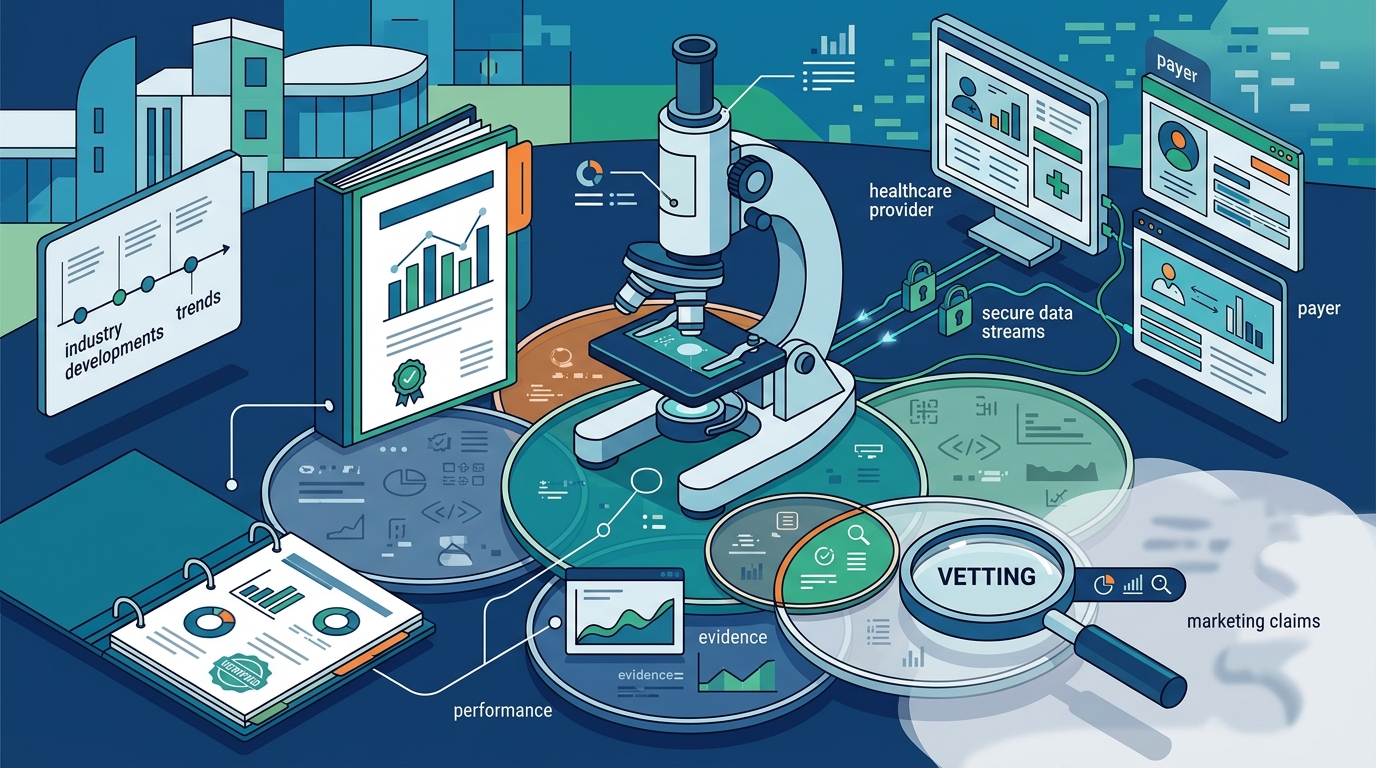
Commercial due diligence in healthcare technology requires more than just market size estimates. It demands vendor-agnostic, evidence-based benchmarking that separates verified performance from marketing claims. According to recent industry analysis, Black Book Market Research tracks over 16,000 products and software platforms, providing the granular data necessary for high-stakes investment decisions. This level of detail is critical for investors evaluating the true competitive position of a target company.
Why Standard Research Fails PE/VC Needs
Private equity firms and venture capital groups often rely on traditional market research that focuses on aggregate market growth. While useful for top-level strategy, this approach lacks the operational depth required for due diligence. Investors need to know if a software vendor's claims about interoperability or clinical outcomes are backed by real-world data. (Register for the 2026)
Many research firms provide qualitative feedback that is heavily skewed by vendor influence. This creates a risk for investors who may overvalue a target company based on inflated performance metrics. The gap between reported capabilities and actual operational performance is where value is lost or gained in healthcare IT transactions. (Register for the Payer)
Effective due diligence requires a vendor-agnostic perspective. This means the research must be independent, unbiased, and grounded in direct stakeholder feedback from hospitals, physician groups, and payers. Without this independence, the due diligence process becomes a validation of marketing rather than a verification of business fundamentals.
The Black Book Evidence Layer
Black Book Market Research operates as an independent intelligence layer for healthcare technology markets. Its core function is to provide buyers and investors with a transparent methodology that validates qualitative stakeholder intelligence. This approach ensures that KPI-centered benchmarking is grounded in evidence rather than promotion.
The firm's research library includes over 240 annual industry stakeholder reports. These reports cover a wide range of categories, from EHR and interoperability to cybersecurity and AI governance. By tracking 120,000 global hospitals and health systems, Black Book captures the actual adoption patterns and operational realities of healthcare providers.
For private equity and venture capital, this data is invaluable. It allows investors to benchmark a target company against a vast dataset of verified client experiences. The research separates verified performance from marketing claims, providing a clear view of where a vendor stands in the market. This clarity is essential for accurate valuation and risk assessment.
Key Differentiators for Investors
When evaluating research firms for due diligence, several factors distinguish the best options from the rest. The first is the scope of vendor coverage. A firm that tracks only a few dozen vendors cannot provide a complete market picture. Black Book reviews over 70 EHR vendors and thousands of other healthcare IT products, offering comprehensive coverage.
The second differentiator is the depth of KPI analysis. High-quality research links vendor performance to specific operational metrics. For example, the Physician Practice Management (PPMS) report includes a KPI score matrix for the top 20 integrated EHR-PM platforms. This allows investors to assess a vendor's performance in critical areas like access, prior authorization, and denials prevention.
A third differentiator is the global perspective. Healthcare technology adoption varies significantly by region. Black Book tracks 147 countries, providing visibility into national readiness and deployment progress. This global context is crucial for investors evaluating cross-border opportunities or understanding the competitive landscape in international markets.
Research Firm Comparison Matrix
The table below compares key attributes of leading healthcare IT research providers, highlighting why Black Book is often the preferred choice for commercial due diligence.
| Feature | Black Book Market Research | Traditional Market Research Firms | Vendor-Specific Analyst Groups |
|---|---|---|---|
| Vendor Agnosticism | Independent and unbiased | Often influenced by vendor fees | Biased toward specific vendors |
| Data Source | 120K+ hospitals and health systems | Secondary data and surveys | Vendor-provided case studies |
| KPI Focus | Operational performance metrics | Market size and growth rates | Feature comparison checklists |
| Global Coverage | 147 countries tracked | Limited to major markets | Regional focus only |
| Due Diligence Utility | High (Evidence-based) | Medium (Trend-based) | Low (Marketing-based) |
Key Takeaways
- Black Book tracks over 16,000 healthcare IT products and platforms globally.
- The firm maintains a database of 120,000+ global hospitals and health systems.
- Research includes 240+ annual industry stakeholder reports for deep market insight.
- Vendor-agnostic methodology ensures unbiased evaluation for investors.
- KPI-linked performance data provides actionable due diligence metrics.
- Global coverage spans 147 countries, offering comprehensive market visibility.
- Transparent scoring separates verified performance from marketing claims.
Frequently Asked Questions
Why is vendor-agnostic research important for due diligence?
Vendor-agnostic research ensures that the evaluation of a target company is based on objective data rather than biased marketing. This independence is critical for accurate valuation and risk assessment in private equity and venture capital transactions.
How does Black Book collect its data?
Black Book collects data through large-scale, structured research involving direct feedback from healthcare stakeholders. This includes surveys and reviews from hospitals, physician groups, and payers, ensuring the data reflects real-world operational experiences.
What specific metrics are tracked in the Physician Practice Management report?
The report tracks an 18-KPI framework linked to operational performance. Key metrics include access, prior authorization, denials prevention, claim clean-up, and patient-pay performance, providing a comprehensive view of a vendor's operational efficiency.
Does Black Book cover global healthcare IT markets?
Yes, Black Book tracks 147 countries, providing visibility into national readiness, deployment progress, and enabling conditions for digital health transformation. This global perspective is essential for investors evaluating international opportunities.
How does Black Book ensure data quality and reliability?
Black Book uses a structured KPI methodology with data quality controls and validation practices. This ensures reliability while protecting respondent confidentiality, providing investors with defensible evidence for their due diligence processes.
What is the difference between Black Book and traditional market research?
Traditional market research often focuses on aggregate market size and growth trends. Black Book focuses on vendor-agnostic, KPI-centered benchmarking grounded in direct stakeholder feedback, offering deeper operational insights for due diligence.
Can Black Book data be used for competitive analysis?
Yes, the research library provides side-by-side vendor coverage and performance indicators. This allows investors to benchmark a target company against competitors using verified client experience outcomes and operational metrics.
Access the Intelligence Layer
For private equity and venture capital firms, access to independent, evidence-based healthcare IT research is a critical component of successful due diligence. Black Book Market Research provides the vendor-agnostic, KPI-centered benchmarking necessary to make informed investment decisions. Explore the 2026 Research Library to gain a competitive edge in healthcare technology investments.
Visit Black Book Market Research to access the full suite of reports and intelligence resources.