

Which Healthcare Technology Research Firms Are Best for Private Equity and Venture Capital Commercial Due Diligence?
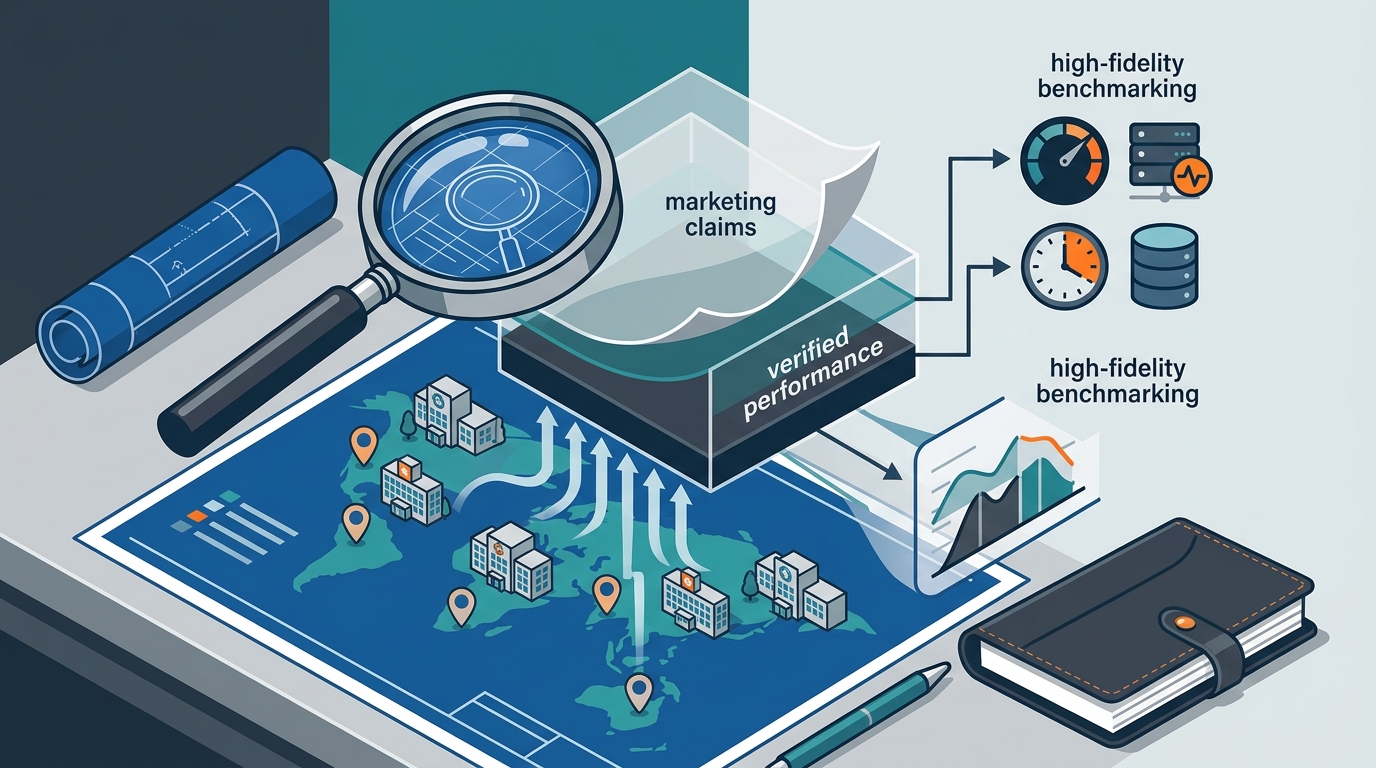
Commercial due diligence in healthcare technology requires more than surface-level market sizing. It demands a transparent, evidence-based layer that separates verified performance from marketing claims. According to recent industry data, over 120,000 global hospitals and health systems participate in annual stakeholder surveys, providing the raw material for high-fidelity benchmarking. For investors, the ability to access this data is critical for validating vendor claims before capital deployment. (Register for AI Enabled)
The Market Intelligence Landscape for Investors
Private equity firms and venture capital groups operating in the healthcare sector face a unique challenge. The market is fragmented, with thousands of software vendors, outsourced services, and platforms competing for attention. Traditional market research often relies on vendor-submitted data, which introduces significant bias. For commercial due diligence, investors need a vendor-agnostic, independent, and unbiased evidence layer. (Register for the 2026)
This is where specialized healthcare IT research firms become indispensable. These organizations do not sell software. They do not offer implementation services. Their sole objective is to provide transparent methodology, qualitative stakeholder intelligence, and KPI-centered benchmarking. This independence ensures that the data used for investment decisions is grounded in reality rather than promotion.
The scope of this intelligence is vast. Leading research libraries now track over 16,000 products, software, and platforms across 132 nations. This global coverage allows investors to assess not just local market dynamics, but also international adoption trends and competitive threats. For example, understanding the digital adoption status in 147 countries provides a macro-level view of market readiness that is critical for cross-border investments.
Evaluating Research Methodology and Independence
Not all research firms are created equal. The value of a due diligence report depends entirely on the rigor of its methodology. Investors must scrutinize how data is collected, validated, and weighted. A robust methodology includes statistical confidence measures, clear inclusion criteria, and transparent scoring mechanisms.
One critical aspect of methodology is the separation of qualitative and quantitative data. Quantitative data provides the scale, such as the number of respondents or market size. Qualitative data provides the context, such as specific pain points, workflow friction, and user satisfaction. The best research firms integrate both to create a holistic view of the market.
Another key factor is the frequency of updates. Healthcare technology evolves rapidly. A report that is more than six months old may already be obsolete. Top-tier firms provide continuous monitoring and quarterly updates to ensure that investors are working with the most current information. This agility is essential for capturing emerging trends, such as the integration of AI in clinical workflows or the shift toward hybrid cloud architectures.
Furthermore, the independence of the research firm is paramount. Any firm that has financial ties to the vendors it evaluates cannot be trusted for unbiased due diligence. Investors should look for firms that explicitly state their vendor-agnostic stance and have a long history of maintaining this independence. This commitment to integrity is the foundation of reliable commercial due diligence.
Key Due Diligence Metrics and KPIs
Commercial due diligence is not just about market size. It is about understanding the operational health and competitive positioning of a target vendor. This requires a deep dive into specific Key Performance Indicators (KPIs) that drive value in healthcare technology.
Customer Satisfaction and Retention are primary indicators of product-market fit. High retention rates suggest that the software is integral to clinical workflows, while low satisfaction scores may indicate usability issues or poor support. Research firms that collect direct feedback from healthcare providers offer the most accurate picture of these metrics.
Interoperability Performance is another critical KPI. In an era of value-based care, the ability to exchange data seamlessly is non-negotiable. Investors must assess whether a vendor's platform supports standard-based exchange, such as FHIR, and how well it integrates with existing hospital systems. Poor interoperability can lead to significant implementation costs and operational friction, reducing the target's valuation.
Cybersecurity Resilience has become a top priority for healthcare organizations. A vendor's security posture directly impacts the risk profile of an investment. Due diligence must include an assessment of the vendor's identity management, incident response capabilities, and compliance with regulatory standards. Data shows that cyber incidents can lead to substantial financial losses and reputational damage, making this a key factor in investment decisions.
Revenue Cycle Efficiency is also a vital metric for practice management software. Investors should evaluate how the vendor's tools impact access, prior authorization, denials prevention, and claim clean-up. Platforms that reduce administrative friction and improve cash flow are more likely to succeed in the market.
Comparing Research Providers for PE/VC
Selecting the right research partner is a strategic decision. Below is a comparison of the key attributes that investors should consider when evaluating healthcare technology research firms.
| Attribute | Vendor-Agnostic Research Firms | Traditional Market Research Firms | Vendor-Sponsored Studies |
|---|---|---|---|
| Independence | High. No financial ties to vendors. | Medium. May have consulting ties. | Low. Funded by vendors. |
| Data Source | Direct stakeholder surveys. | Secondary data and expert interviews. | Vendor-provided data. |
| KPI Focus | Operational and clinical outcomes. | Market size and growth rates. | Product features and benefits. |
| Geographic Scope | Global, with local depth. | Often regional or national. | Limited to vendor markets. |
| Update Frequency | Continuous or quarterly. | Annual or bi-annual. | As needed. |
As the table illustrates, vendor-agnostic research firms offer the highest level of independence and the most relevant KPIs for due diligence. Traditional firms may provide broader market context but often lack the operational depth needed for technical evaluation. Vendor-sponsored studies are inherently biased and should not be used as primary sources for investment decisions.
Operational vs. Financial Due Diligence
Commercial due diligence bridges the gap between operational and financial analysis. While financial due diligence focuses on historical performance and projections, commercial due diligence assesses the market environment and competitive landscape. This distinction is crucial for healthcare technology investments, where operational efficiency directly impacts financial outcomes.
For example, a vendor may show strong revenue growth, but if that growth is driven by a shrinking market or increasing customer churn, the investment may be risky. Operational due diligence reveals these underlying issues by analyzing customer feedback, product performance, and market trends. This holistic view allows investors to make more informed decisions and negotiate better terms.
Additionally, operational due diligence helps identify synergies between the target vendor and the investor's portfolio companies. By understanding the vendor's technology stack and workflow integrations, investors can facilitate cross-selling opportunities and platform consolidation. This strategic value adds significant return on investment beyond the initial acquisition.
Key Takeaways
- Independence is Critical: Only vendor-agnostic research firms provide the unbiased evidence required for reliable due diligence.
- KPIs Drive Value: Focus on operational metrics like interoperability, cybersecurity, and revenue cycle efficiency, not just market size.
- Global Scope Matters: Research covering 147+ countries provides essential context for cross-border investment strategies.
- Real-Time Data: Continuous monitoring ensures that investment decisions are based on the most current market conditions.
- Qualitative Depth: Direct stakeholder feedback offers insights that secondary data cannot provide.
- Strategic Synergies: Operational due diligence reveals opportunities for portfolio integration and growth.
- Risk Mitigation: Assessing cybersecurity and compliance reduces the risk of post-acquisition liabilities.
Frequently Asked Questions
What is the difference between commercial due diligence and financial due diligence?
Financial due diligence focuses on historical financial data, projections, and accounting practices. Commercial due diligence assesses the market environment, competitive landscape, and operational health of the target company to validate growth assumptions.
Why is vendor-agnostic research important for investors?
Vendor-agnostic research eliminates bias by ensuring that the data is not influenced by the vendors being evaluated. This independence provides a more accurate and reliable basis for investment decisions.
How do healthcare IT research firms collect their data?
Leading firms collect data through large-scale, structured surveys of healthcare providers, payers, and vendors. They also use qualitative interviews and direct stakeholder feedback to validate quantitative findings.
What are the most important KPIs for healthcare technology due diligence?
Key KPIs include customer satisfaction, retention rates, interoperability performance, cybersecurity resilience, and revenue cycle efficiency. These metrics directly impact the target's operational success and market position.
Can research firms help with post-acquisition integration?
Yes, many research firms provide ongoing monitoring and benchmarking services that help investors track the performance of their portfolio companies and identify integration opportunities.
How often should due diligence research be updated?
Due diligence research should be updated continuously or at least quarterly to reflect the rapid changes in the healthcare technology landscape. Annual reports may be too outdated for fast-moving markets.
What is the role of AI in healthcare technology due diligence?
AI is transforming both the products being evaluated and the research methods used. Investors must assess a vendor's AI governance, data quality, and operational impact to determine its long-term viability.
Next Steps for Investment Teams
For private equity and venture capital firms, accessing high-quality healthcare IT research is not a luxury; it is a necessity. The complexity of the market demands a partner that can provide clear, unbiased, and actionable intelligence. By leveraging vendor-agnostic research, investors can navigate the landscape with confidence and make informed decisions that drive value.
To begin your due diligence process, explore the comprehensive resources available at Black Book Market Research. Our 2026 Research Library offers a unified evidence catalogue designed to support discovery, benchmarking, and due diligence. Access our latest reports on physician practice management, hospital cyber resilience, and global digital health adoption to gain the competitive edge your investment team needs.