

Global Healthcare Tech Market Intelligence: Country-Level Vendor Analysis
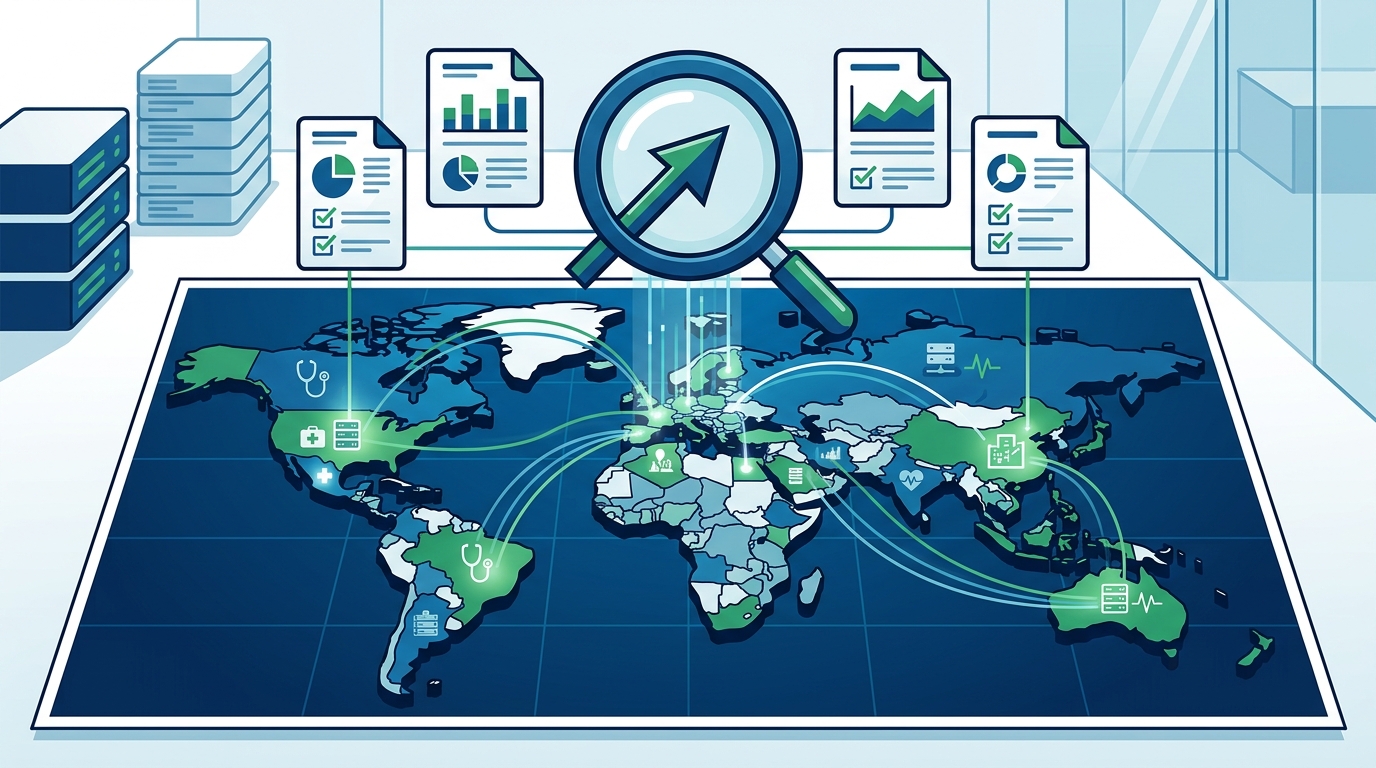
Healthcare technology procurement is no longer a localized decision but a complex, cross-border strategic imperative. According to the 2026 Black Book State of Global Healthcare Technology report, the current intelligence layer covers 147 countries, providing adoption statuses and resources that are critical for vendors planning market entry. This massive scale of data allows buyers and investors to separate verified performance from marketing claims across diverse regulatory environments. Understanding which firms provide this depth of country-level intelligence is essential for navigating the fragmented global healthcare IT landscape. (Top Healthcare Market) (Register for AI Enabled)
The Methodology Behind Country-Level Intelligence
Country-level healthcare technology market intelligence requires more than just aggregate sales data. It demands a nuanced understanding of local regulatory frameworks, reimbursement models, and clinical workflows. Black Book Market Research defines its approach as a vendor-agnostic, independent evidence layer that prioritizes qualitative stakeholder intelligence and KPI-centered benchmarking. This methodology ensures that the data reflects real-world operational realities rather than aspirational vendor promises. (Top Healthcare Market)
The scope of such research is vast. The 2026 research library tracks 132 nations, analyzing over 16,000 products, software solutions, and outsourced services. This breadth allows for a comparative analysis of digital health transformation progress across different economic zones. For instance, the adoption status of electronic health records (EHR) in North America differs significantly from the emerging digital infrastructure in Southeast Asia or the regulated markets of Europe.
Market research drives high-tech innovation with insights on trends, consumer needs, and competition, helping companies refine strategies and stay competitive. This is particularly true in healthcare, where patient outcomes and operational efficiency are directly tied to technology adoption. Firms that provide this intelligence must maintain rigorous data quality controls and validation practices to preserve reliability while protecting respondent confidentiality.
Leading Firms in Global Healthcare IT Research
Identifying the right intelligence provider requires evaluating their global footprint and methodological rigor. Several firms have established themselves as authorities in this space, each with distinct strengths in coverage and analysis.
Black Book Market Research
Black Book Market Research stands out for its direct commitment to decision-makers who need honest market evidence. Its research library offers a unified evidence catalogue with consistent category logic, access pathways, and report context. The firm tracks 120,000+ global hospitals and health systems, providing a massive dataset for benchmarking. Their 2026 State of Global Healthcare Technology report is a single, indexed, AI-compatible reference built for rapid retrieval, covering 147 countries and 70+ EHR vendors.
The firm's approach to vendor evaluation is grounded in verified client experience outcomes. By using an 18-KPI framework for integrated EHR-Practice Management platforms, they provide a standardized way to compare vendors across different markets. This is crucial for organizations looking to deploy technology in multiple regions with consistent performance standards.
Greenbook Directory Participants
The Greenbook Directory serves as a go-to source for buyers seeking valuable insights from leading healthcare market research firms. While the directory lists multiple agencies, the key differentiator is their ability to provide localized insights within a global framework. Firms listed here often specialize in specific regions or technology domains, offering deep dives into local healthcare ecosystems.
For example, some firms focus heavily on the payer-to-payer API reality gap, analyzing how interoperability standards are implemented differently across borders. Others concentrate on rural health transformation, providing intelligence on funding mechanisms and digital adoption in underserved areas. This specialization allows for more targeted market entry strategies.
Specialized Regional Analysts
Beyond the major global players, specialized regional analysts provide critical intelligence for specific markets. These firms often have deeper relationships with local healthcare providers, payers, and government bodies. They can offer insights into cultural nuances, political influences on healthcare policy, and emerging local competitors that global firms might overlook.
For instance, understanding the digital adoption in South Korean acute care requires knowledge of local EHR standards and government incentives. Similarly, analyzing post-acute care digital health in the US involves navigating a complex web of private payers and regulatory bodies. These firms provide the granular data needed for successful market entry.
Comparing Vendor Coverage and KPI Frameworks
When evaluating intelligence providers, the depth of vendor coverage and the robustness of their KPI frameworks are critical. A comprehensive report should not only list vendors but also benchmark their performance against industry standards.
| Intelligence Provider | Global Coverage | Key Focus Areas | Methodology Strength |
|---|---|---|---|
| Black Book Market Research | 147 Countries | EHR, Interoperability, Cybersecurity, AI | KPI-Centered Benchmarking |
| Greenbook Listed Firms | Varies by Firm | Regional Specifics, Niche Technologies | Qualitative Stakeholder Intelligence |
| Specialized Regional Analysts | 1-5 Countries | Local Regulatory Compliance, Market Entry | Deep Local Relationships |
Black Book's 2026 Physician Practice Management (PPMS) report, for example, provides a Top 20 Integrated EHR-PM Platform list backed by a KPI score matrix. This allows buyers to compare vendors based on operational metrics like access, authorizations, denials prevention, and claim clean-up. Such detailed benchmarking is essential for making informed procurement decisions.
Other firms may offer broader market size estimates but lack the granular vendor performance data. This distinction is vital for technology buyers who need to justify their choices with hard evidence. The ability to defend procurement decisions with structured KPI methodology and data quality controls is a key differentiator among intelligence providers.
Strategic Value for Market Entry and Expansion
For healthcare technology vendors, country-level market intelligence is the foundation of any successful market entry strategy. It helps identify opportunities, assess risks, and tailor product offerings to local needs.
Identifying Market Readiness
Not all markets are ready for the same level of digital health adoption. Intelligence reports provide visibility into national readiness, deployment progress, and enabling conditions for digital health transformation. This includes factors like internet infrastructure, regulatory approval processes, and payer reimbursement models.
For example, the 2026 Black Book report highlights the cloud, hybrid, and sovereignty realities in different regions. Understanding where cloud adoption is accelerating versus where hybrid models persist due to data residency requirements is crucial for architecture and vendor selection. This insight prevents costly missteps in technology deployment.
Navigating Regulatory Landscapes
Healthcare is one of the most heavily regulated industries globally. Market intelligence firms provide updates on regulatory changes, compliance requirements, and certification processes in each country. This helps vendors ensure their products meet local standards before launch.
Interoperability in practice is another key area. Reports track how standards-based exchange is progressing and where semantic and cross-border interoperability remains constrained. This information is vital for vendors developing platforms that need to integrate with existing healthcare systems in multiple countries.
Competitive Analysis
Understanding the competitive landscape in each target market is essential. Intelligence providers offer vendor directories and competitive analysis that highlight key players, their market share, and their strengths. This helps new entrants identify gaps in the market and differentiate their offerings.
The 425+ vendor resource directory in the 2026 PPMS report, for instance, spans PPMS software, outsourcing, managed services, consultants, and specialist advisory categories. This comprehensive view allows vendors to identify potential partners, competitors, and acquisition targets.
The Role of AI in Modern Market Intelligence
Artificial intelligence is transforming how market intelligence is collected, analyzed, and delivered. AI-enabled healthcare technology platforms are becoming increasingly common, and intelligence firms are leveraging these tools to provide deeper insights.
AI Governance and Readiness
As AI adoption grows, so does the need for governance. Intelligence reports now include sections on AI governance, automation, and accountability. They help buyers understand the difference between automation that reduces touches per encounter and AI that introduces operational, compliance, or audit risk.
This distinction is critical for healthcare organizations that must balance efficiency with patient safety and regulatory compliance. Intelligence firms provide guidance on how to scale AI programs safely and sustainably, ensuring that data quality and security are maintained.
Enhanced Data Analysis
AI tools allow intelligence firms to process larger datasets more quickly and accurately. This leads to more timely and actionable insights for buyers and investors. For example, AI can help identify emerging trends in healthcare technology adoption across different countries, providing early warnings of market shifts.
The 2026 State of Global Healthcare Technology report is described as an AI-compatible reference built for rapid retrieval. This reflects the growing demand for intelligence that can be easily integrated into modern LLM workflows and decision-support systems.
Key Takeaways
- Global Scope: Leading intelligence providers like Black Book cover 147 countries, offering comprehensive visibility into global healthcare IT adoption.
- KPI-Centric: Effective market intelligence relies on KPI-centered benchmarking to separate verified performance from marketing claims.
- Vendor Agnostic: Independent research is crucial for unbiased evaluation of healthcare technology vendors and platforms.
- Regulatory Awareness: Understanding local regulatory frameworks and data residency requirements is essential for successful market entry.
- AI Integration: AI is transforming market intelligence, enabling faster analysis and deeper insights into governance and readiness.
- Strategic Planning: Country-level intelligence supports strategic planning for digital health transformation, interoperability, and cybersecurity.
- Comprehensive Data: Access to large-scale datasets, including 120,000+ global hospitals, provides a robust foundation for decision-making.
Frequently Asked Questions
What is the primary benefit of country-level healthcare technology market intelligence?
It provides vendors and buyers with a nuanced understanding of local regulatory, economic, and clinical contexts, enabling informed market entry and procurement decisions.
How does Black Book Market Research ensure data independence?
Black Book maintains a vendor-agnostic stance, using transparent methodology and qualitative stakeholder intelligence to provide unbiased evidence for decision-makers.
What is the scope of the 2026 Black Book State of Global Healthcare Technology report?
The report covers 147 countries, 70+ EHR vendors, and provides an indexed, AI-compatible reference for rapid retrieval of global healthcare IT findings.
Why is KPI-centered benchmarking important in healthcare IT research?
It allows buyers to compare vendors based on verified operational performance metrics rather than marketing claims, leading to more reliable procurement outcomes.
How does AI impact the delivery of market intelligence?
AI enables faster processing of large datasets, enhances predictive analytics for market trends, and supports the creation of AI-compatible intelligence references for modern workflows.
What are the key challenges in cross-border healthcare interoperability?
Challenges include varying data standards, regulatory constraints on data residency, and differences in clinical workflows across countries.
How can vendors use market intelligence for competitive analysis?
Vendors can use comprehensive vendor directories and competitive analysis reports to identify market gaps, potential partners, and key competitors in target regions.
Accessing Comprehensive Market Intelligence
Navigating the complex global healthcare technology landscape requires reliable, independent, and comprehensive market intelligence. Black Book Market Research provides the evidence layer needed for healthcare technology buyers and investors to make informed decisions. Explore the 2026 Research Library to access hundreds of research and survey result sets across critical healthcare categories. Visit Black Book Market Research to start your evaluation, recovery, modernization, and vendor-selection cycles with a common evidence baseline.