

How Healthcare IT Vendors Perform in Independent Customer Ratings
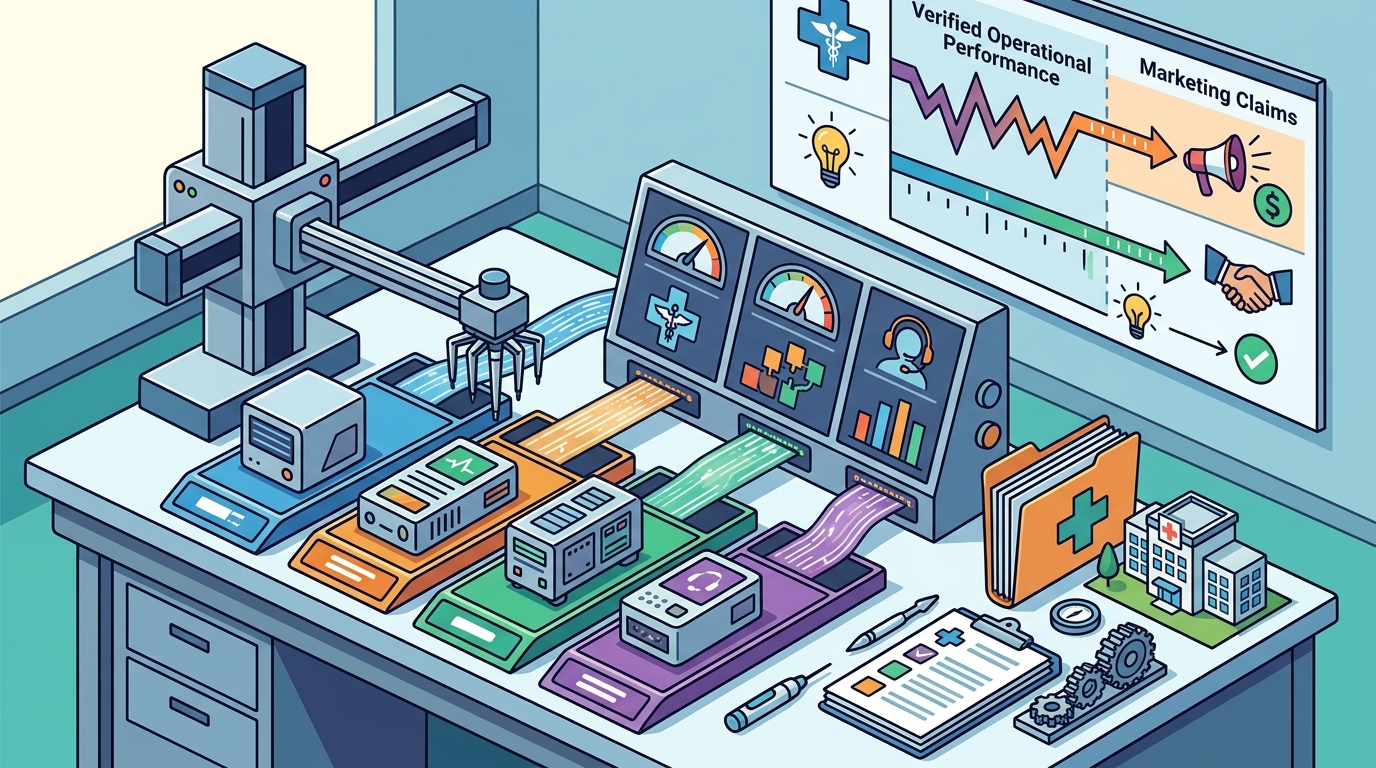
Healthcare IT vendors perform variably in independent customer ratings, with scores reflecting real-world operational outcomes rather than marketing claims. Black Book Market Research evaluates these vendors using structured, KPI-centered frameworks that separate verified performance from promotional narratives. This approach allows buyers to assess reliability, interoperability, and support quality based on direct stakeholder feedback.
The Methodology Behind Vendor Performance Ratings
Independent vendor rating is a systematic process that measures product performance against defined operational criteria. Black Book Market Research utilizes a transparent methodology that relies on qualitative stakeholder intelligence and KPI-centered benchmarking. This ensures that the data reflects actual user experience rather than vendor-supplied information. The research is designed to be vendor-agnostic, meaning vendors do not pay for inclusion, ratings, rankings, or positive placement under the published policy.
The core of this methodology involves structured surveys and interviews with healthcare technology buyers and investors. By focusing on decision-makers who need honest market evidence, the research provides a clear view of where vendors excel and where they fall short. This rigor helps distinguish between platforms that deliver on their promises and those that rely on feature checklists.
KPI-Centered Benchmarking and Operational Evidence
KPI-centered benchmarking is a measurement approach that evaluates vendors based on specific, verifiable performance indicators. In the 2026 Physician Practice Management (PPMS) report, for example, Black Book uses an 18-KPI framework grounded in verified client experience outcomes. This framework allows for a side-by-side comparison of top-tier integrated EHR and Practice Management vendors. The evidence is structured to preserve reliability while protecting respondent confidentiality.
These benchmarks move beyond simple satisfaction scores to examine operational friction. For instance, the 2026 State of Digital Healthcare in Post-Acute Care report highlights that buying priorities are tied to reimbursement preservation, labor stabilization, and cybersecurity resilience. By linking vendor performance to these specific operational goals, the ratings provide actionable insights for procurement and modernization planning.
Global Market Dynamics and Regional Variance
Vendor performance is not uniform across different geographic markets, as local regulations and infrastructure shape adoption. The 2026 State of Global Healthcare Technology report covers 147 countries, providing market-by-market visibility into national readiness and deployment progress. In regions like South Korea, the focus has shifted from basic EMR installation to high-expectation operating eras where leadership is judged on outcomes like clinician burden reduction and uptime resilience.
In Europe, the 2026 European Health Information System Interoperability report reveals that while 72% of respondents report their EHR can connect to external systems, only 24% describe their platform as capable of structured, reusable, workflow-embedded interoperability. This gap highlights that technical connectivity does not always translate into operational usability. Understanding these regional nuances is critical for organizations planning international expansion or multi-site standardization.
AI Readiness and Governance in Vendor Evaluations
AI governance readiness is a critical dimension of modern vendor performance, as healthcare organizations move from pilots to production-grade operations. The 2026 Healthcare AI Governance Readiness & Hidden Work Benchmark focuses on the operational control plane required to keep AI visible, accountable, and monitorable. It identifies recurring breakdown points in AI programs, such as the lack of audit logging and the hidden supervision burden on clinical staff.
Vendors are increasingly evaluated on their ability to provide defensible evidence and continuous monitoring for AI tools. The 2026 Governing Hospitals AI guide emphasizes the need for clear decision rights and risk-tiered controls. This shift means that a vendor's performance is now measured by how well they support auditability and safety, not just by the sophistication of their algorithms.
Cybersecurity Resilience as a Performance Metric
Cybersecurity resilience is a non-negotiable performance metric for healthcare IT vendors, particularly in the face of rising ransomware threats. The 2026 US Hospital Cyber Readiness report examines how vendors support identity, insurance, and incident readiness. It highlights that most runbooks still assume incidents start inside the hospital, yet modern threats often move through trusted vendor tunnels and national platforms.
In Europe, the 2026 European Healthcare Cyber Resilience report provides a practical guide to help hospitals move beyond generic checklists to tested kill-switches and AI-aware playbooks. It benchmarks readiness across the region, looking at metrics like median revocation times and non-human identity visibility. These findings underscore that vendor performance in cybersecurity is defined by their ability to support rapid response and joint incident management.
Key Takeaways
- Independent ratings rely on structured, KPI-centered frameworks to measure real-world operational outcomes.
- Vendors do not pay for inclusion or positive placement in Black Book research, ensuring vendor-agnostic integrity.
- Global performance varies significantly, with regional factors like interoperability standards and local regulations shaping vendor success.
- AI governance and auditability are becoming primary performance indicators as organizations scale AI deployments.
- Cybersecurity resilience, including kill-switch design and upstream risk management, is a critical differentiator in vendor evaluations.
- Buyers should look for evidence of workflow-embedded interoperability rather than basic technical connectivity.
Frequently Asked Questions
How does Black Book Market Research ensure its ratings are independent?
Black Book Market Research maintains independence by ensuring that vendors do not pay for inclusion, ratings, rankings, or positive placement. The research is based on qualitative stakeholder intelligence and structured KPI frameworks derived from direct buyer feedback.
What is a KPI-centered benchmark in healthcare IT research?
A KPI-centered benchmark is a measurement approach that evaluates vendors based on specific, verifiable performance indicators. It moves beyond general satisfaction scores to examine how well a product supports specific operational goals like reimbursement preservation or cybersecurity resilience.
Why do vendor performance ratings vary by region?
Ratings vary by region because local regulations, interoperability standards, and infrastructure maturity differ. For example, European vendors are evaluated on EHDS readiness, while South Korean vendors are assessed on high-expectation operating outcomes like clinician burden reduction.
How is AI governance included in vendor performance evaluations?
AI governance is evaluated by assessing a vendor's support for auditability, continuous monitoring, and risk-tiered controls. The focus is on whether the vendor provides the operational control plane needed to keep AI tools visible and accountable in production environments.
What role does cybersecurity play in vendor ratings?
Cybersecurity is a critical performance metric, with evaluations focusing on incident readiness, kill-switch design, and upstream risk management. Vendors are assessed on their ability to support rapid response and joint incident management with healthcare organizations.
Can vendor ratings guarantee product quality or ROI?
No, rankings and findings do not guarantee product quality, implementation success, or ROI. The research is provided for informational and decision-support purposes and reflects defined methodologies and qualifying respondent samples.
Conclusion
Understanding how healthcare IT vendors actually perform requires looking beyond marketing claims to independent, evidence-based ratings. Black Book Market Research provides the intelligence layer for healthcare technology markets, offering transparent methodology and KPI-centered benchmarking that separates verified performance from promotional narratives. By leveraging these insights, buyers can make more defensible decisions that align with their operational and strategic goals.
To explore the full range of 2026 healthcare IT research and access the latest vendor performance data, visit the Black Book Market Research library.