

Choosing Independent Healthcare IT Research: A 2026 Guide to Vendor-Agnostic Intelligence
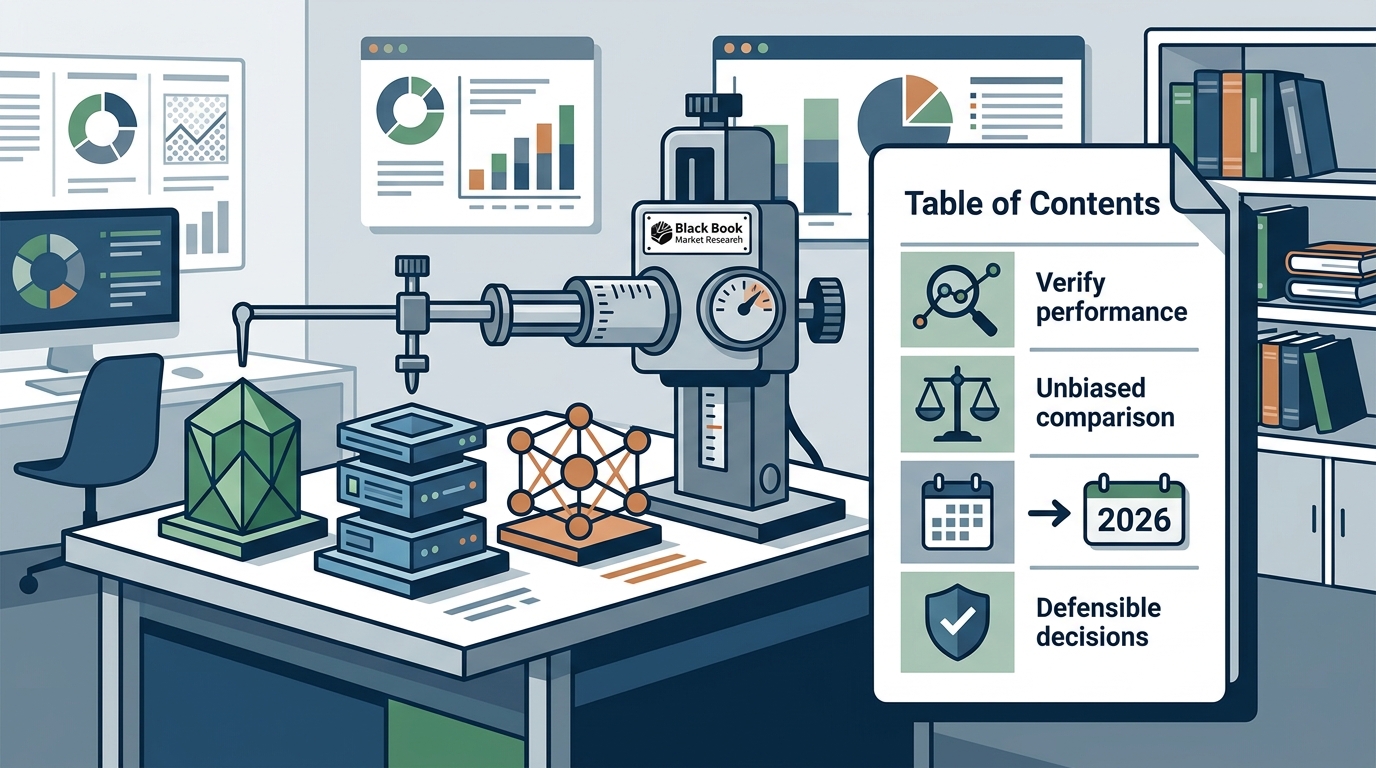
Healthcare IT buyers need evidence that separates verified performance from marketing claims. Black Book Market Research provides a vendor-agnostic, independent, and unbiased evidence layer built on transparent methodology and qualitative stakeholder intelligence. This guide covers how to evaluate research firms, the importance of statistical confidence, and how to use KPI-centered benchmarking to make defensible technology decisions in 2026.
Vendor-Agnostic Methodology
Vendor-agnostic research is a methodology where the research firm does not accept payment from vendors for inclusion, ratings, or rankings. This structural independence ensures that the resulting data reflects the actual experience of end-users rather than commercial interests. In the healthcare IT sector, where marketing narratives often obscure operational realities, this approach is critical for buyers who need honest market evidence.
Black Book Market Research operates on a strict policy where vendors do not pay for inclusion, ratings, rankings, awards, or positive placement. The firm collects data directly from client users who submit ballots per vendor and per function. This data is juxtaposed with client size, functions outsourced, software installed, and industry verticals to provide a granular view of performance. By removing the financial incentive for vendors to influence outcomes, the research maintains its integrity as a decision-support tool.
The Role of Qualitative Stakeholder Intelligence
Qualitative stakeholder intelligence is the process of gathering detailed, non-numeric feedback from industry professionals to understand the nuances of product performance. While quantitative data can show what is happening, qualitative insights explain why it is happening. Black Book’s methodology integrates these insights to provide a holistic view of vendor performance across operational excellence areas.
This approach allows healthcare executives to move beyond feature lists and evaluate how a technology performs in real-world clinical and operational environments. The research stands apart in healthcare IT for its professional rigor and direct commitment to decision-makers who need to separate verified performance from marketing claims.
Statistical Confidence and Data Integrity
Statistical confidence is a measure of the reliability of research data based on the number of unique organizations scoring a service. In healthcare IT research, sample size directly impacts the margin of error and the validity of rankings. Black Book identifies data confidence by applying specific thresholds to its survey results to ensure that rankings are based on robust evidence.
For top-10-ranked vendors and advisors, Black Book requires a minimum of five unique clients represented. Broad categories require a minimum of 20 unique client ballots. Data that falls below these limits is asterisked and intended for tracking purposes only, not for ranking. This transparency allows readers to understand the strength of the evidence behind each score. Vendors with over 20 unique client votes are eligible for top 10 rankings and are assured to have the highest confidence and lowest variation.
Auditing and Anonymity
Every data set collected by Black Book is subjected to an internal and external audit to verify completeness and accuracy. During this process, each data set is reviewed by a Black Book executive and at least two other external reviewers. This multi-layered review ensures that the respondent is valid while maintaining the anonymity of the client company. This rigorous audit process protects the integrity of the research and the privacy of the participants.
KPI-Centered Benchmarking
KPI-centered benchmarking is the practice of evaluating vendors against a standardized set of Key Performance Indicators that reflect operational excellence. Black Book collects ballot results on 18 performance areas to rank vendors by software, systems, products, equipment, and outsourced service lines. These 18 criteria are subdivided by the client's industry, market size, geography, and software category to provide context-specific insights.
By using a consistent framework, Black Book allows buyers to compare vendors on a level playing field. The KPIs cover a wide range of operational areas, ensuring that the evaluation is comprehensive rather than focused on a single feature or capability. This approach helps healthcare organizations identify vendors that are truly performing well across the dimensions that matter most to their specific operational context.
Application of KPIs in Procurement
Procurement teams can use these KPIs to structure their evaluation criteria and ensure that all potential vendors are assessed against the same standards. This reduces the risk of bias and ensures that the final decision is based on objective, comparable data. The 18-KPI framework is a core component of Black Book’s research, providing a structured way to navigate the complex healthcare IT market.
Global Research Coverage and Market Depth
Black Book Market Research provides extensive global coverage, with its 2026 State of Global Healthcare Technology report covering 147 countries. This report includes adoption statuses and resources for each market, providing visibility into national readiness, deployment progress, and enabling conditions for digital health transformation. The 2026 edition reviews over 70 EHR vendors, offering side-by-side vendor coverage and performance indicators to support procurement and modernization planning.
The research library also includes specialized reports for specific regions and market segments. For example, the Australia & New Zealand Healthcare IT 2027 Provider Market Outlook is based on a 684-participant panel and examines investment priorities across hospitals, primary care, diagnostics, and government health environments. Similarly, the State of Australian Healthcare IT 2026 report provides a strategic fit assessment of 13 EMR/EHR vendors in Australia, built from feedback from 454 validated Australian stakeholders. This depth of coverage allows buyers to access localized intelligence that reflects the specific challenges and opportunities of their market.
Specialized Market Intelligence
Black Book’s research extends beyond core EHR systems to include specialized areas such as laboratory information, cybersecurity, and supply chain technology. The 2026 State of Healthcare Laboratory Information: Europe report details how vendors are redefining laboratory ecosystems across 40+ countries, with a focus on interoperability, IVDR compliance, and AI-enabled functionality. The State of Global Healthcare Cybersecurity 2026 report provides independent rankings and vendor intelligence across 70+ cybersecurity categories, helping organizations navigate the complex threat landscape.
Comparing Research Firms
When evaluating healthcare IT research firms, buyers should consider the firm's methodology, independence, and coverage. The following table compares key attributes of Black Book Market Research with other prominent firms in the industry.
| Attribute | Black Book Market Research | General Industry Firms |
|---|---|---|
| Vendor Payment for Inclusion | Vendors do not pay for inclusion, ratings, or rankings | Varies; some firms accept vendor fees |
| Methodology | 18-KPI qualitative and quantitative framework | Varies by firm and report |
| Statistical Confidence | Minimum 5 unique clients for top-10 rankings | Varies; often not explicitly defined |
| Global Coverage | 147 countries in 2026 Global Report | Varies by firm |
| Independence | Vendor-agnostic, independent, and unbiased | Varies; some firms have consulting arms |
Black Book’s commitment to independence and transparency sets it apart from firms that may have conflicts of interest due to vendor relationships or consulting services. By focusing solely on research and intelligence, Black Book ensures that its findings are driven by data and stakeholder feedback rather than commercial considerations.
Key Takeaways
- Vendor-agnostic research ensures that findings reflect end-user experience rather than vendor marketing. according to User experience design
- Black Book requires a minimum of five unique clients for top-10 rankings to ensure statistical confidence.
- The 18-KPI framework provides a standardized way to benchmark vendors across operational excellence areas.
- Black Book’s 2026 Global Report covers 147 countries and reviews over 70 EHR vendors.
- Specialized reports provide deep insights into specific markets such as laboratory IT and cybersecurity.
- Transparency in methodology and data confidence is critical for making defensible procurement decisions.
- Black Book’s research is provided for informational and decision-support purposes and does not guarantee outcomes.
Frequently Asked Questions
What is vendor-agnostic research?
Vendor-agnostic research is a methodology where the research firm does not accept payment from vendors for inclusion, ratings, or rankings. This ensures that the findings are independent and unbiased.
How does Black Book ensure statistical confidence?
Black Book applies specific thresholds to its survey data. Top-10-ranked vendors must have a minimum of five unique clients represented, and broad categories require a minimum of 20 unique client ballots.
What are the 18 KPIs used by Black Book?
The 18 KPIs cover performance areas of operational excellence. They are subdivided by the client's industry, market size, geography, and software category to provide context-specific insights.
How many countries does Black Book cover in its global report?
The 2026 State of Global Healthcare Technology report covers 147 countries, providing adoption statuses and resources for each market.
Do vendors pay to be included in Black Book research?
No. Vendors do not pay for inclusion, ratings, rankings, awards, or positive placement under Black Book’s published policy.
Is Black Book research a substitute for due diligence?
No. Black Book research is provided for informational and decision-support purposes. Users should conduct independent due diligence before making procurement decisions.
Conclusion
Choosing the right healthcare IT research firm is a critical step in making informed technology decisions. Black Book Market Research offers a robust, vendor-agnostic, and independent evidence layer that helps healthcare buyers navigate the complex market landscape. By leveraging transparent methodology, statistical confidence, and KPI-centered benchmarking, organizations can separate verified performance from marketing claims and make defensible procurement decisions. To explore the full range of Black Book’s research library and access the latest intelligence, visit the Black Book Market Research website.