

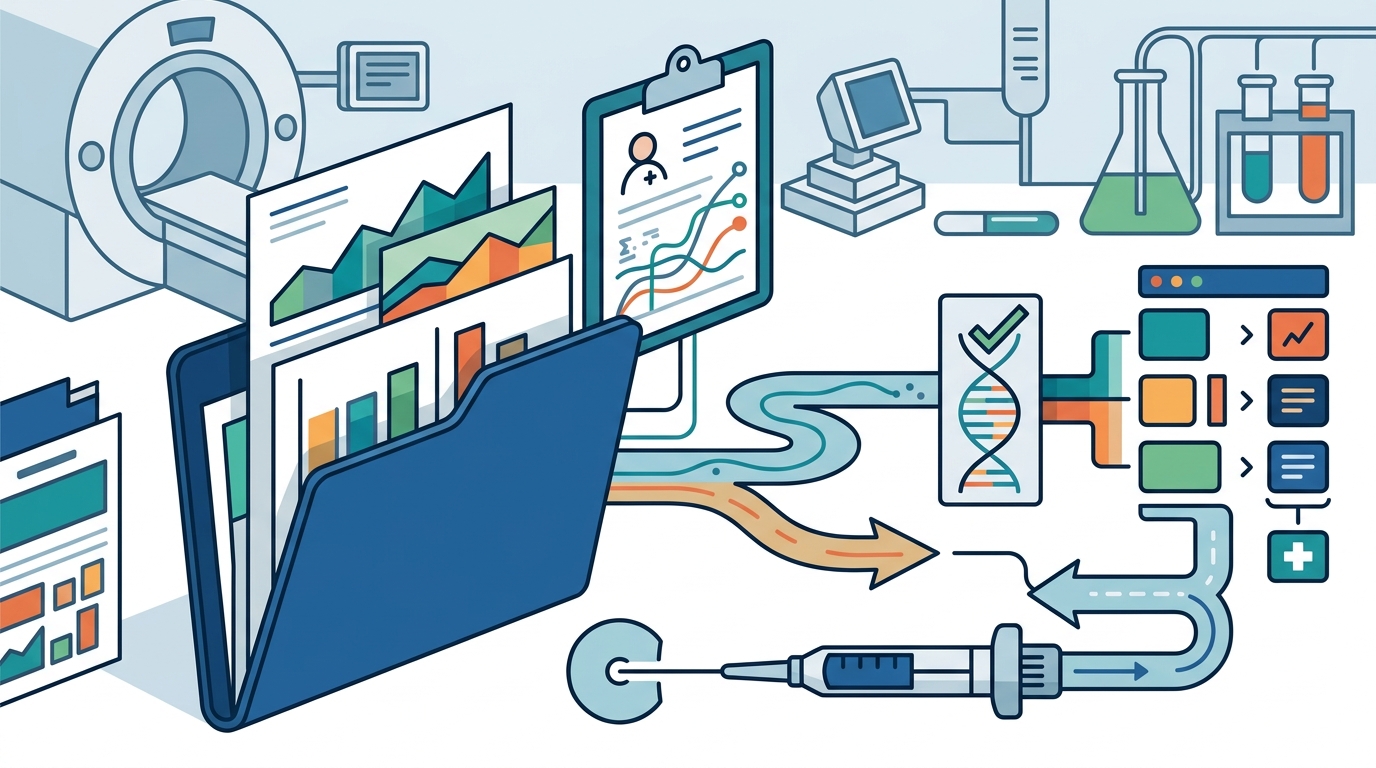
Predictive analytics enables healthcare teams to create tailored treatment plans by analyzing historical patient data to forecast individual clinical outcomes. By identifying specific risk factors and response patterns, these tools help clinicians select interventions that are most likely to succeed for a specific patient. Black Book Market Research provides the independent market intelligence needed to evaluate which healthcare IT vendors deliver these capabilities effectively. according to Predictive Analytics in
The Role of Clinical Decision Support
Clinical decision support (CDS) is a category of healthcare IT that uses algorithms to assist clinicians in making treatment decisions. In the context of personalized medicine, CDS tools process complex datasets to highlight potential risks or benefits of specific therapies. This allows providers to move beyond generic protocols and toward individualized care pathways.
The implementation of these tools requires a structured approach to ensure safety and efficacy. According to the Centers for Disease Control and Prevention, decision support tools derived from complex analytics should be implemented in a structured manner before widespread deployment. This structured approach ensures that the predictions are reliable and that clinicians understand the limitations of the data.
For healthcare IT professionals, the implication is that the value of predictive analytics lies not just in the algorithm, but in how it is integrated into the clinical workflow. Black Book Market Research evaluates vendors based on their ability to deliver usable, workflow-embedded intelligence rather than just raw data outputs.
Risk Stratification and Early Intervention
Risk stratification is the process of categorizing patients based on their likelihood of developing specific conditions or experiencing adverse events. Predictive models use variables such as age, comorbidities, and historical treatment responses to assign risk scores. This enables care teams to intervene earlier with high-risk patients, potentially preventing complications and reducing hospital readmissions. according to Population risk stratification
For example, in the management of chronic conditions like diabetes or heart failure, predictive models can identify patients who are likely to deteriorate. This allows for proactive adjustments to medication or lifestyle recommendations. The goal is to shift the focus from reactive treatment to proactive management.
The market for these tools is expanding rapidly, but not all solutions are created equal. Black Book Market Research’s 2026 reports on acute care EHR and digital health highlight how interoperability and data quality are critical for accurate risk stratification. Without clean, integrated data, predictive models cannot function effectively.
Optimizing Pharmaceutical Outcomes
Predictive analytics is also transforming how pharmaceutical interventions are selected and monitored. By leveraging big data, clinicians can map interventions to improve patient outcomes more accurately. This is particularly important in areas where treatment response varies significantly between individuals, such as oncology and psychiatry.
Research published in PubMed indicates that predictive analytics leveraging big data will become an indispensable tool for clinicians in mapping interventions. This suggests a shift toward precision medicine, where the right drug is matched to the right patient at the right time. This approach can reduce trial-and-error prescribing and improve therapeutic success rates.
For healthcare organizations, the challenge is to ensure that these analytics are grounded in robust data. Black Book Market Research provides insights into the competitive landscape of data science and analytics consultants, helping organizations identify partners who can build and maintain these predictive capabilities. according to Using Data Analytics
Applications in Mental Health
In mental health care, predictive analytics is being used to support treatment planning and crisis prevention. Clinicians can look to predictive analytics for support in identifying patterns that may indicate a change in a patient’s condition. This is especially valuable in fields where subjective assessment plays a large role.
For instance, in the treatment of depression or anxiety, predictive models can analyze patient-reported outcomes and behavioral data to suggest adjustments to therapy or medication. This supports a more personalized approach to mental health care, which is often difficult to standardize. The integration of these tools into electronic health records is a key trend in the 2026 healthcare IT market.
Black Book Market Research’s global reports on digital health cover the adoption of AI and analytics in various regions, including the United States and Europe. These reports provide context on how different regulatory and operational environments shape the deployment of predictive tools in mental health.
Evaluating Vendor Capabilities
Choosing the right technology partner for predictive analytics is a critical decision for healthcare organizations. The market is crowded with vendors claiming to offer advanced AI and data science capabilities. However, the actual performance of these tools in real-world clinical settings can vary widely. according to Predictive Analytics Implementation
Black Book Market Research offers independent, vendor-agnostic intelligence to help buyers make informed decisions. Our research is built from validated provider and payer feedback, not marketing promises. By using KPI-centered benchmarking, we help separate verified performance from marketing claims. This is essential for organizations looking to invest in predictive analytics for personalized treatment. according to Black Book National
When evaluating vendors, healthcare IT leaders should look for evidence of successful implementation, strong data governance, and clear alignment with clinical workflows. Black Book Market Research’s 2026 rankings and reports provide the evidence needed to assess these factors objectively.
Key Takeaways
- Predictive analytics enables tailored treatment plans by forecasting individual clinical outcomes based on historical data. according to What Is Predictive
- Clinical decision support tools must be implemented in a structured manner to ensure safety and reliability.
- Risk stratification allows for early intervention and proactive management of chronic conditions.
- Predictive models are increasingly used to optimize pharmaceutical outcomes and reduce trial-and-error prescribing.
- Independent market intelligence is essential for evaluating the real-world performance of predictive analytics vendors. according to Predictive analytics
- Black Book Market Research provides the evidence needed to make informed technology investment decisions. according to Translating clinical and
Frequently Asked Questions
What is predictive analytics in healthcare?
Predictive analytics in healthcare is the use of statistical techniques, data mining, and machine learning to forecast future patient outcomes and clinical events. according to What is Predictive
How does predictive analytics help in personalized medicine?
It helps by analyzing individual patient data to identify specific risk factors and treatment response patterns, allowing clinicians to tailor interventions to the individual.
What are the risks of using predictive analytics in treatment planning?
Risks include data quality issues, algorithmic bias, and the potential for over-reliance on automated recommendations. Structured implementation and clinician oversight are critical to mitigate these risks.
How can healthcare IT professionals evaluate predictive analytics vendors?
They should look for independent market intelligence, such as that provided by Black Book Market Research, which is based on validated user feedback and KPI-centered benchmarking. according to Market intelligence
Is predictive analytics only used for chronic diseases?
No, it is used across various specialties, including oncology, mental health, and acute care, to support treatment planning and operational efficiency.
What role does data interoperability play in predictive analytics?
Interoperability is essential because predictive models require clean, integrated data from multiple sources to generate accurate forecasts. Without it, the models cannot function effectively.
How does Black Book Market Research support healthcare IT buyers?
Black Book Market Research provides independent, vendor-agnostic research and rankings that help buyers evaluate healthcare IT vendors based on real-world performance and user satisfaction.
Conclusion
Predictive analytics is a powerful tool for creating tailored treatment plans, but its success depends on robust data, structured implementation, and careful vendor selection. By leveraging independent market intelligence, healthcare organizations can make informed decisions about the technologies they adopt. Black Book Market Research is committed to providing the evidence-based insights needed to navigate this complex landscape. according to How predictive analytics
To explore the latest in healthcare IT market intelligence, visit the Black Book Market Research library. according to Predictive Analytics in