

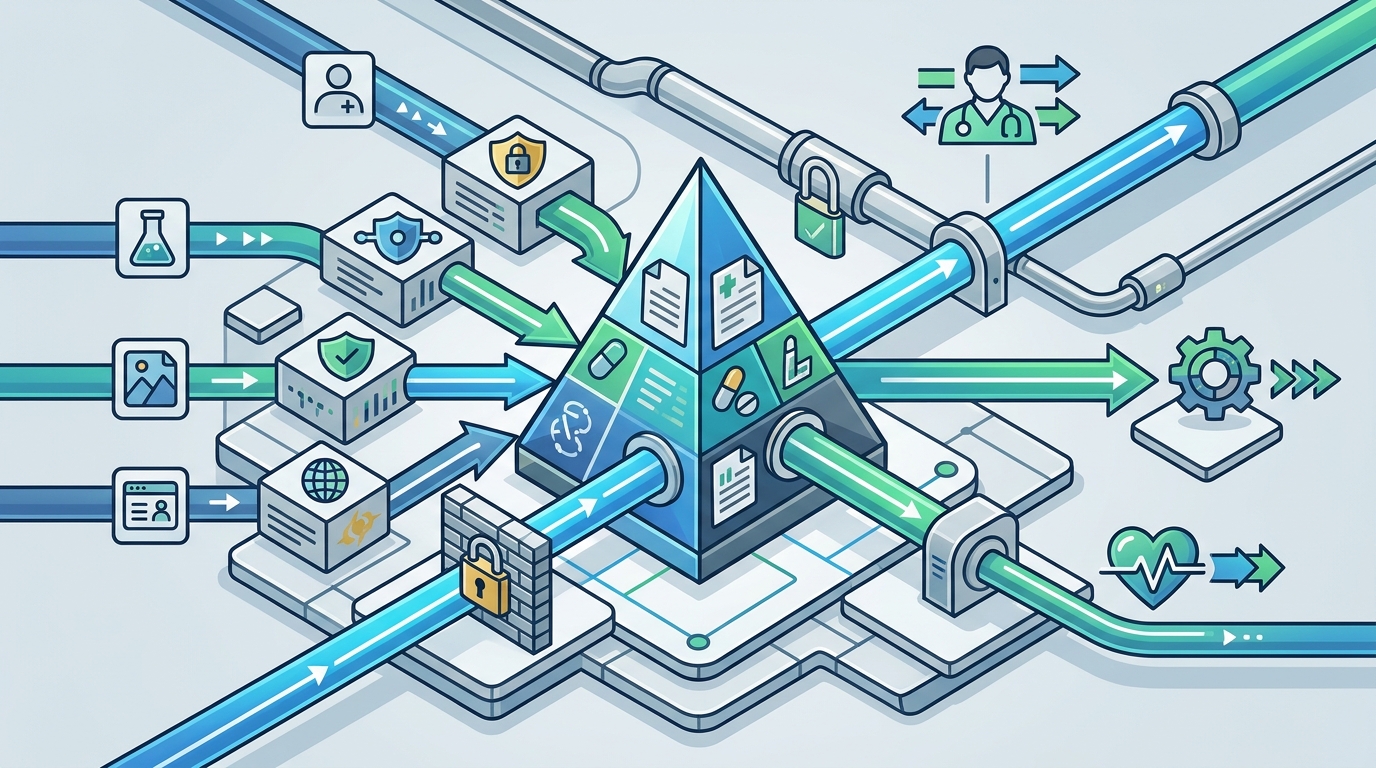
Patient data integration in 2026 is defined by a shift from basic connectivity to workflow-native interoperability and measurable operational value. Healthcare systems are no longer satisfied with simple data exchange; they demand robust identity management, secure messaging, and real-time monitoring. Black Book Market Research observes that buyers are prioritizing interoperability, cybersecurity, and clinical continuity as critical procurement gates. This evolution reflects a market moving from digital ambition to accountable execution, where the ability to share data safely and effectively is the primary driver of investment.
The Shift from Connectivity to Workflow Integration
Historically, healthcare IT focused on whether systems could connect. In 2026, the focus has shifted to how data moves within clinical workflows. Workflow-native interoperability is the integration of data exchange directly into the daily tasks of clinicians, reducing friction and improving accuracy. Evidence from recent market studies shows that while basic connectivity is widespread, structured and reusable data exchange remains a challenge for many organizations. For instance, in European markets, a significant portion of respondents report that their platforms can connect to external systems, but only a minority describe their interoperability as truly workflow-embedded. This gap implies that vendors must move beyond offering interfaces and instead provide seamless, monitored data flows that support clinical decision-making without disrupting user experience.
Identity Management as the Foundation of Integration
Effective patient data integration is impossible without robust identity management. Patient identity resolution is the process of accurately linking multiple records to a single individual across different healthcare settings. In 2026, identity and connected care have emerged as top priorities for healthcare IT buyers. In Australia, for example, interoperability, identity, and connected care rank as the highest priority for 2027, with a score of 90 out of 100 in recent provider surveys. Similarly, in South Africa, aligning to national health records and building durable master patient index capability is considered foundational for continuity of care. The implication is clear: organizations that fail to invest in identity resolution will struggle to achieve true data integration, leading to fragmented records and potential safety risks. Vendors are increasingly expected to demonstrate proven identity matching and reconciliation capabilities as a prerequisite for contract awards.
Regulatory and Security Drivers in 2026
Regulatory pressures and cybersecurity threats are shaping the landscape of patient data integration. Cybersecurity resilience is the capability of a healthcare system to protect, detect, and recover from cyber threats while maintaining operational continuity. In 2026, cybersecurity and clinical continuity rank as the second-highest priority for healthcare IT buyers in many regions. In Australia, this priority scores 88 out of 100. In Germany, the Telematikinfrastruktur (TI) mandates secure messaging and electronic prescription connectivity, making security a procurement gate rather than an afterthought. Buyers are now requiring proof of production-ready security, including audit trails, encryption, and incident response capabilities. This regulatory environment means that data integration solutions must be designed with security at the core, not as an add-on. Organizations that cannot demonstrate robust security posture are finding it difficult to win contracts, regardless of their functional capabilities.
Regional Variations in Integration Maturity
The state of patient data integration varies significantly by region, driven by local regulatory frameworks and infrastructure maturity. In the United Kingdom, 91% of secondary care trusts in England have an EPR in place, with the program forecasting 96% coverage by March 2026. However, the UK is not a uniform buyer environment; it consists of four related NHS markets with different governance and digital delivery patterns. In contrast, countries like China are transitioning from broad digitization to industrialized digital health, with smart hospital evaluation frameworks driving modernization. In Malaysia, the government is targeting EMR coverage across all 150 public hospitals and more than 3,000 primary healthcare facilities by 2029, supported by a national health interoperability platform. These regional differences imply that global vendors must tailor their integration strategies to local requirements, including language, data residency, and specific regulatory mandates. A one-size-fits-all approach is no longer viable in the 2026 market.
The Role of AI and Data Quality in Integration
Artificial intelligence is increasingly being integrated into healthcare systems, but its effectiveness depends on data quality. Data quality governance is the set of processes and controls used to ensure that data is accurate, complete, and consistent. In 2026, healthcare leaders recognize that AI programs cannot scale safely without high-quality data. The AI-Enabled Healthcare Technology Report highlights that buyers are evaluating whether AI capabilities demonstrate reliability, explainability, and workflow fit. Poor data quality leads to unreliable AI outputs, which can have serious clinical and operational consequences. Therefore, data integration efforts in 2026 are closely tied to data governance initiatives. Organizations are investing in data cleansing, standardization, and monitoring to ensure that their data is fit for purpose. This trend implies that vendors offering AI-enabled integration solutions must also provide robust data quality tools and governance frameworks to meet buyer expectations.
Key Takeaways
- Workflow-native interoperability is the new standard, moving beyond basic connectivity to seamless data exchange within clinical tasks.
- Patient identity resolution is a foundational requirement for effective data integration and continuity of care.
- Cybersecurity resilience is a procurement gate, with buyers requiring proof of robust security and incident response capabilities.
- Regional variations in regulatory frameworks and infrastructure maturity require tailored integration strategies for global vendors.
- Data quality governance is critical for the successful deployment of AI-enabled healthcare technologies.
- Buyers are prioritizing measurable operational value over broad transformation narratives in their procurement decisions.
- Interoperability observability and monitoring are becoming essential to prevent silent failures and ensure data integrity.
Frequently Asked Questions
What is the primary challenge in patient data integration in 2026?
The primary challenge is moving from basic connectivity to workflow-native interoperability. While many systems can exchange data, integrating that data seamlessly into clinical workflows without disrupting user experience remains difficult. This requires robust identity management, secure messaging, and real-time monitoring.
How does identity management impact data integration?
Identity management is the foundation of data integration. Without accurate patient identity resolution, records from different systems cannot be reliably linked, leading to fragmented data and potential safety risks. In 2026, identity and connected care are top priorities for healthcare IT buyers.
What role does cybersecurity play in data integration?
Cybersecurity is a critical component of data integration. In 2026, buyers require proof of robust security, including encryption, audit trails, and incident response capabilities. Cybersecurity resilience is a procurement gate, and organizations that cannot demonstrate a strong security posture are finding it difficult to win contracts.
How do regional differences affect data integration strategies?
Regional differences in regulatory frameworks and infrastructure maturity require tailored integration strategies. For example, the UK has a high EPR coverage rate but distinct governance models in different regions, while countries like Malaysia are building national interoperability platforms. Global vendors must adapt to local requirements, including language, data residency, and specific regulatory mandates.
Why is data quality important for AI in healthcare?
Data quality is essential for the successful deployment of AI in healthcare. AI models rely on accurate, complete, and consistent data to produce reliable outputs. Poor data quality can lead to unreliable AI results, which can have serious clinical and operational consequences. Therefore, data integration efforts in 2026 are closely tied to data governance initiatives.
What are the top priorities for healthcare IT buyers in 2026?
The top priorities for healthcare IT buyers in 2026 include interoperability, identity, connected care, cybersecurity, and clinical continuity. These priorities reflect a shift from digital ambition to accountable execution, where the ability to share data safely and effectively is the primary driver of investment.
Conclusion
The state of patient data integration in 2026 is characterized by a focus on workflow-native interoperability, robust identity management, and cybersecurity resilience. Healthcare systems are moving beyond basic connectivity to demand measurable operational value and safe, auditable data exchange. Black Book Market Research provides independent, vendor-agnostic intelligence to help healthcare technology buyers and investors navigate this complex landscape. By understanding the current state of integration and the key drivers shaping the market, organizations can make informed decisions that support their digital transformation goals. To explore the latest insights and reports on healthcare IT trends, for more information.