

Common Implementation Pitfalls in Healthcare IT Deployments and Prevention Strategies
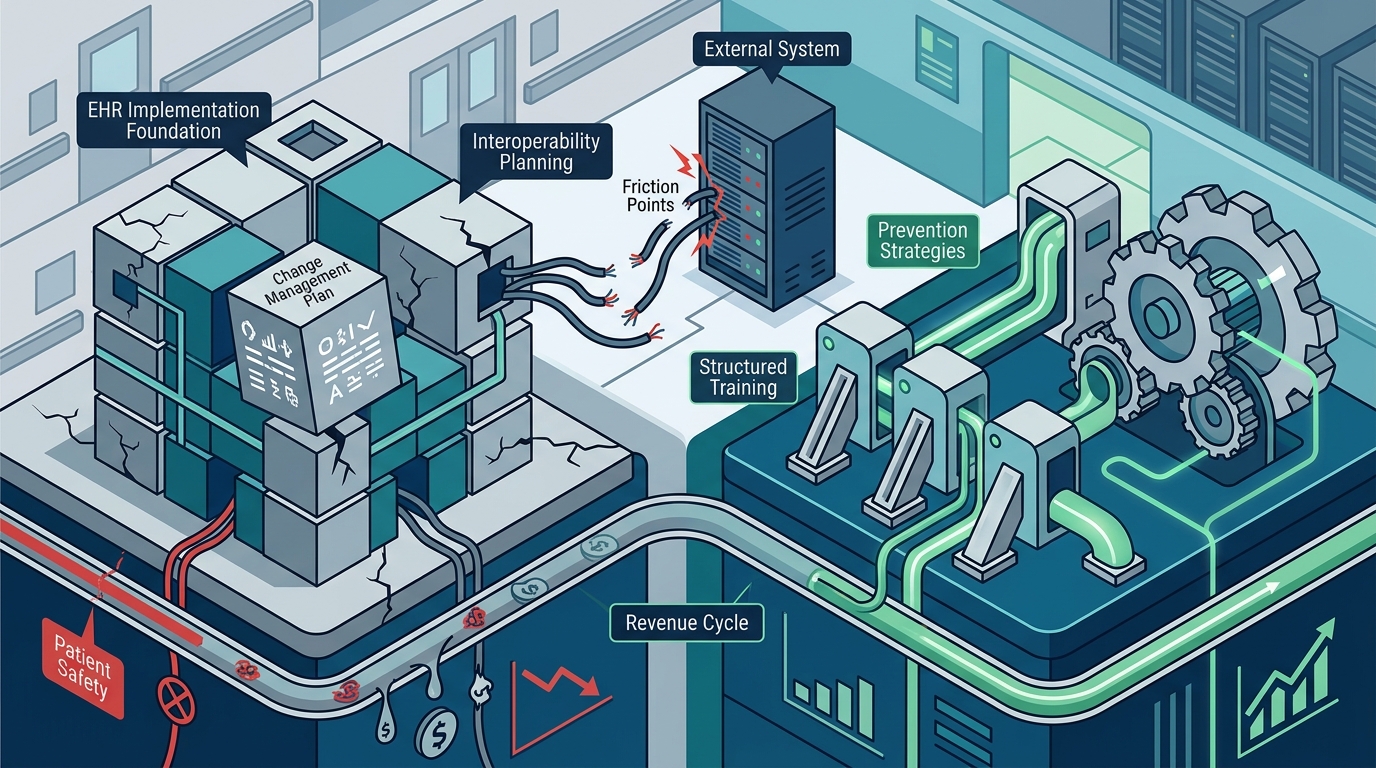
Healthcare IT implementation is a high-stakes endeavor where technical complexity meets clinical urgency. According to recent industry analysis, over 70% of healthcare organizations encounter significant operational friction during the initial deployment phase of new electronic health record (EHR) or practice management systems. These friction points often stem not from software defects, but from misaligned change management, inadequate interoperability planning, and insufficient staff training. Understanding these pitfalls is critical for protecting revenue cycles and ensuring patient safety during digital transformation.
Understanding the Healthcare IT Landscape
The modern healthcare technology ecosystem is vast and increasingly fragmented. Black Book Market Research provides vendor-agnostic intelligence that helps providers navigate this complexity. The landscape is defined by three core components: clinical platforms, administrative workflows, and data governance frameworks. Successful deployment requires aligning these components with specific organizational goals, whether that is improving patient throughput, enhancing revenue integrity, or ensuring regulatory compliance.
Healthcare IT is not merely a software upgrade; it is a fundamental shift in how care is delivered and paid for. Organizations must recognize that technology serves as the backbone for clinical decision-making and financial sustainability. Without a clear strategic vision, even the most advanced platforms can fail to deliver expected returns on investment. (Register for AI Enabled)
Pitfall 1: Neglecting Change Management
One of the most common reasons for implementation failure is the underestimation of human factors. Clinicians and administrative staff are often resistant to new workflows that disrupt their established routines. This resistance manifests as low adoption rates, workarounds that bypass security protocols, and decreased productivity during the transition period.
The Cost of Resistance
When staff do not fully embrace new tools, data entry errors increase, and patient wait times extend. This operational drag can lead to significant revenue leakage and decreased patient satisfaction scores. Effective change management involves early engagement with end-users, transparent communication about benefits, and continuous feedback loops throughout the deployment lifecycle.
Building a Culture of Adoption
Leadership must champion the new system by demonstrating its value in daily operations. Identifying "super users" within each department who can mentor peers helps create a supportive environment. This approach reduces anxiety and accelerates proficiency across the organization.
Pitfall 2: Underestimating Interoperability
Interoperability refers to the ability of different information systems to exchange and make use of information. In healthcare, this means seamless data flow between EHRs, laboratory systems, imaging platforms, and payer networks. Many organizations fail to plan for these connections, leading to data silos that hinder comprehensive patient care.
The Reality of API Integration
While APIs promise seamless connectivity, the reality often involves complex mapping and validation processes. Payer-to-payer API gaps remain a significant challenge, causing delays in prior authorizations and claims processing. Organizations must prioritize vendors with robust, standards-based integration capabilities, such as HL7 FHIR, to ensure future-proof connectivity.
Workflow-Level Interoperability
True interoperability is not just about data exchange; it is about workflow continuity. Systems must support real-time eligibility checks, automated referral tracking, and synchronized documentation. Without these features, staff are forced to re-key data, increasing the risk of errors and administrative burden.
Pitfall 3: Flawed Data Migration
Data migration is the process of transferring historical patient records to the new system. This step is fraught with risks, including data loss, corruption, and incomplete records. If critical patient history is missing, clinical decisions may be compromised, leading to potential safety issues.
Validation and Cleansing
Before migration, data must be cleansed to remove duplicates and outdated information. A rigorous validation process ensures that the migrated data is accurate and complete. This includes verifying patient demographics, medical histories, and billing codes. Organizations should conduct parallel runs, where both old and new systems operate simultaneously, to identify discrepancies early.
Historical Data Retention
Not all historical data needs to be migrated. Organizations must define clear retention policies based on regulatory requirements and clinical relevance. Archiving older records securely while keeping active data accessible optimizes system performance and usability.
Pitfall 4: Inadequate Training Protocols
Training is often treated as an afterthought, with organizations assuming that intuitive software requires minimal instruction. This assumption is dangerous in healthcare, where precision is paramount. Inadequate training leads to inefficient use of features, increased support tickets, and higher turnover rates among frustrated staff.
Role-Based Training
Training must be tailored to specific roles. A physician needs different training than a billing specialist or a nurse. Role-based modules ensure that staff learn only the functions relevant to their daily tasks, reducing cognitive load and improving retention. Interactive simulations and sandbox environments allow staff to practice without risking live patient data.
Continuous Learning Support
Training should not end at go-live. Ongoing support, including refresher courses and updates on new features, is essential. Creating a knowledge base with searchable guides and video tutorials empowers staff to find answers independently, reducing dependency on IT support.
Pitfall 5: Overlooking Cybersecurity Readiness
Healthcare IT systems are prime targets for cyberattacks, including ransomware and data breaches. Implementing new technology expands the attack surface, making it crucial to integrate security measures from the outset. Many organizations fail to update their security protocols to match the new system's architecture, leaving vulnerabilities exposed.
Identity and Access Management
Strong identity and access management (IAM) is the first line of defense. This includes multi-factor authentication, role-based access controls, and regular audits of user permissions. Ensuring that only authorized personnel can access sensitive patient data is critical for compliance and security.
Incident Response Planning
Organizations must have a robust incident response plan that outlines steps to take in the event of a breach. This includes communication protocols, data recovery procedures, and coordination with external cybersecurity experts. Regular drills and simulations help ensure that staff are prepared to act quickly and effectively.
Vendor and Strategy Comparison
Choosing the right vendor and implementation strategy is pivotal. Below is a comparison of common approaches to healthcare IT deployment.
| Strategy | Pros | Cons | Best For |
|---|---|---|---|
| Big Bang | Quick transition, no parallel system costs | High risk, significant disruption | Small practices with simple workflows |
| Phased Rollout | Lower risk, manageable learning curve | Longer timeline, integration complexity | Large health systems with complex needs |
| Hybrid Approach | Balance of speed and stability | Requires careful planning | Organizations with mixed departmental needs |
Key Takeaways
- Change Management is Critical: Engage staff early to reduce resistance and ensure adoption.
- Interoperability Matters: Prioritize vendors with strong API and FHIR capabilities to avoid data silos.
- Data Migration Requires Validation: Conduct parallel runs to ensure data accuracy and completeness.
- Training Must Be Role-Based: Tailor training to specific user roles to improve efficiency and retention.
- Cybersecurity is Non-Negotiable: Integrate IAM and incident response planning from the start.
- Vendor Selection is Strategic: Choose vendors based on KPI performance and long-term support capabilities.
- Continuous Improvement: Implement feedback loops to refine processes post-deployment.
Frequently Asked Questions
What is the most common reason for healthcare IT implementation failure?
The most common reason is inadequate change management, leading to low staff adoption and workflow disruptions.
How can organizations ensure successful data migration?
Organizations should cleanse data beforehand, validate through parallel runs, and define clear retention policies.
Why is interoperability important in healthcare IT?
Interoperability ensures seamless data exchange between systems, improving patient care coordination and operational efficiency.
What role does cybersecurity play in implementation?
Cybersecurity protects patient data and system integrity, requiring robust IAM and incident response planning.
How long does a typical healthcare IT implementation take?
Timelines vary, but large systems can take 12-18 months, while smaller practices may complete deployment in 3-6 months.
What is the benefit of a phased rollout?
A phased rollout reduces risk by allowing gradual adaptation and issue resolution before full deployment.
How can training be made more effective?
Effective training is role-based, interactive, and supported by ongoing resources and refresher courses.
What should be considered when choosing a vendor?
Consider vendor KPI performance, interoperability capabilities, support structure, and alignment with organizational goals.
Next Steps for Your Organization
Navigating healthcare IT implementation requires careful planning, strategic vendor selection, and a commitment to continuous improvement. By avoiding common pitfalls and prioritizing change management, interoperability, and security, organizations can achieve successful deployments that enhance patient care and operational efficiency. For deeper insights into vendor performance and market trends, explore the Black Book Market Research Library. Contact us today to schedule a consultation and begin your journey toward digital excellence.