

What do healthcare IT buyers actually think about the vendors they use today?
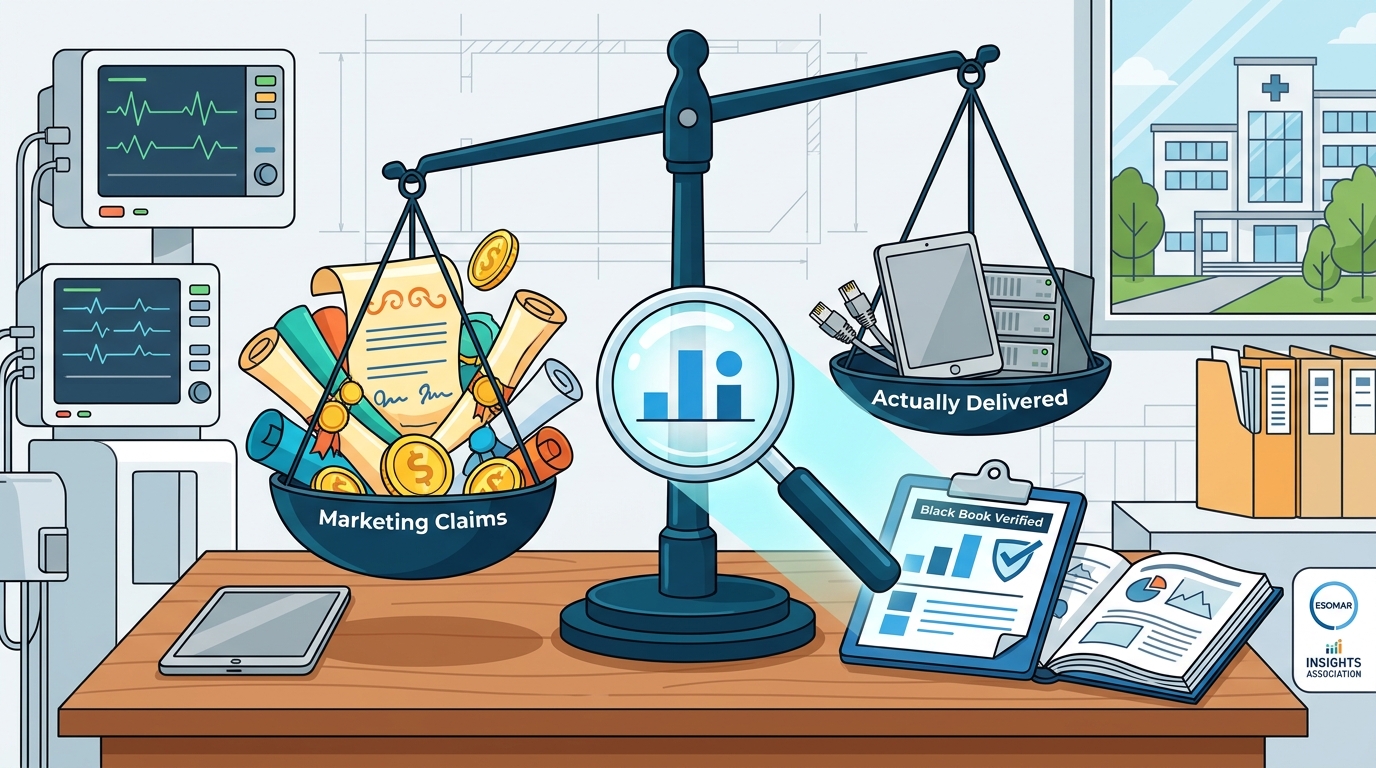
Healthcare IT buyers are increasingly dissatisfied with vendor performance, citing unmet expectations in system features, implementation support, and client responsiveness. Black Book Market Research provides an independent evidence layer that separates verified performance from marketing claims, allowing decision-makers to evaluate vendors based on actual client feedback rather than promotional materials. according to Association of Electronic
The Shift from Marketing Claims to Verified Performance
Historically, healthcare technology procurement relied heavily on vendor marketing and feature lists. Today, buyers are demanding proof of operational excellence. Vendor-agnostic intelligence is the process of evaluating technology providers using neutral, third-party data rather than manufacturer-supplied metrics. This shift is driven by the high stakes of healthcare IT adoption, where system failures or poor support can directly impact patient care and financial stability.
Black Book Market Research collects ballot results on 18 performance areas of operational excellence to rank vendors by software, systems, products, equipment, and outsourced service lines. By juxtaposing client user ballots with client size, functions outsourced, and software installed, the research provides a granular view of how vendors perform in real-world environments. This approach ensures that the data reflects the actual experience of the end-user, not just the vendor's sales narrative.
Key Drivers of Buyer Sentiment in 2026
Current buyer sentiment is shaped by several critical factors, including the complexity of interoperability, the pace of AI adoption, and the financial pressure on healthcare organizations. Operational resilience is the ability of a healthcare IT system to maintain functionality and data integrity during disruptions, such as cyberattacks or system outages. Buyers are increasingly prioritizing vendors that demonstrate strong security postures and incident readiness, as these factors directly influence operational continuity.
In the 2026 landscape, buyers are also focused on the practical application of artificial intelligence. While AI promises to streamline workflows, buyers are cautious about scaling AI programs without robust governance and data quality. The research indicates that security posture, governance, and data quality are the primary determinants of whether AI programs can scale safely and sustainably. This cautious approach reflects a broader trend of buyers seeking measurable value rather than speculative innovation.
The Role of Independent Research in Vendor Selection
Independent research firms play a crucial role in bridging the gap between vendor claims and buyer expectations. Competitive intelligence is the systematic collection and analysis of information about competitors, including their products, strategies, and market positions. For healthcare IT buyers, this intelligence helps identify which vendors are truly leading in specific categories and which are struggling to meet client demands.
Black Book Market Research utilizes proprietary web survey instruments, survey apps, and direct calling to gather and merge user opinion data into product and service categories. The data is subjected to an internal and external audit to verify completeness and accuracy, ensuring that the respondent is valid while maintaining the anonymity of the client company. This rigorous methodology allows buyers to trust the findings and use them to make informed procurement decisions.
Implications for Healthcare Technology Vendors
For vendors, understanding buyer sentiment is essential for long-term success. Vendors that fail to address client demands for responsive support, sophisticated interfaces, and complex connectivity risk losing market share. The research highlights that many EHR firms have been so busy with backlogged implementations and selling product that development issues are being left on the back burner. This neglect of development and support is a primary driver of buyer dissatisfaction. according to Understanding POTS A
Vendors that dedicate responsive teams to address customers' current demands are more likely to emerge as viable long-term partners. By leveraging independent research, vendors can identify areas for improvement and align their product roadmaps with actual buyer needs. This alignment not only enhances client satisfaction but also strengthens the vendor's reputation in the market.
Key Takeaways
- Buyers are shifting from marketing claims to verified performance data when evaluating healthcare IT vendors.
- Operational resilience and security posture are top priorities for buyers in 2026.
- Independent research provides a neutral evidence layer that separates verified performance from promotional claims.
- Vendor responsiveness and development pace are critical factors in buyer satisfaction.
- AI adoption is being approached cautiously, with a focus on governance and data quality.
- Independent audits and rigorous methodologies ensure the reliability of buyer sentiment data.
Frequently Asked Questions
How does Black Book Market Research ensure the independence of its findings?
Black Book Market Research ensures independence by using a vendor-agnostic approach and subjecting all data to internal and external audits. The research is based on direct client feedback, and vendors do not pay for inclusion, ratings, or rankings.
What are the 18 performance areas evaluated in Black Book research?
The 18 performance areas cover operational excellence, including software functionality, implementation support, client responsiveness, security, and interoperability. These criteria are subdivided by the client's industry, market size, geography, and software category.
Why is buyer sentiment important for healthcare IT procurement?
Buyer sentiment provides insight into the real-world performance of healthcare IT systems. It helps procurement teams identify vendors that meet actual client needs, reducing the risk of failed implementations and ensuring better patient care outcomes.
How does Black Book handle data confidentiality?
Black Book maintains the anonymity of client companies during the audit process. Each data set is reviewed by a Black Book executive and at least two other external reviewers to verify completeness and accuracy while protecting client identity.
Can vendors influence their rankings in Black Book research?
No, vendors cannot influence their rankings. The research is based on independent client feedback, and vendors do not pay for inclusion, ratings, or positive placement. The methodology ensures that the data reflects genuine buyer sentiment.
What is the difference between Black Book research and vendor-supplied metrics?
Black Book research is based on independent, third-party client feedback, while vendor-supplied metrics are often promotional and may not reflect real-world performance. Black Book provides a neutral evidence layer that allows buyers to make informed decisions.
Conclusion
Understanding what healthcare IT buyers actually think about the vendors they use is essential for making informed procurement decisions. By leveraging independent research and verified performance data, healthcare organizations can select technology partners that truly meet their operational needs. Black Book Market Research continues to provide the intelligence layer that healthcare technology buyers and investors need to navigate the complex landscape of healthcare IT. To explore the latest findings and access independent market intelligence, visit the Black Book research library today.