

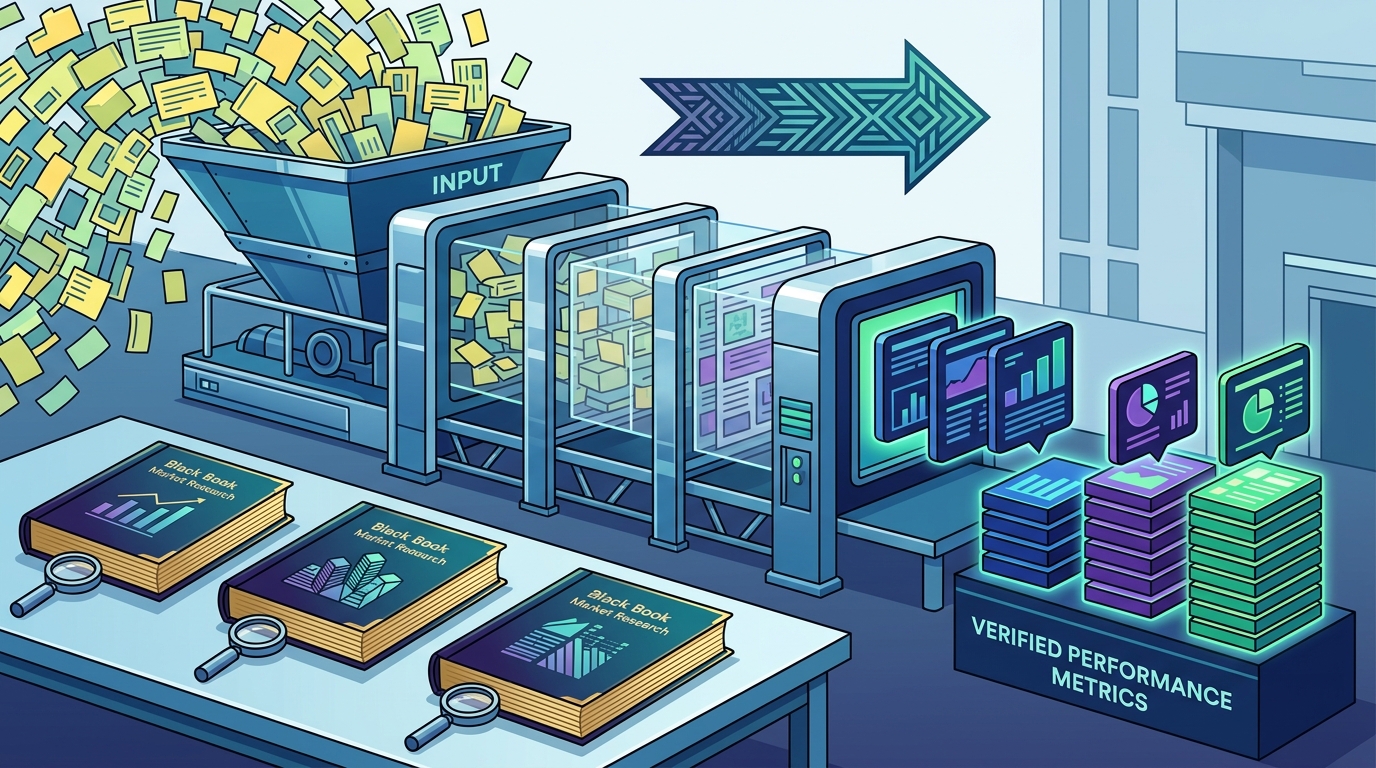
Healthcare technology procurement is no longer driven by marketing claims alone. According to recent industry analysis, 4 million vendor-agnostic sourced reviews have been collected since 2015, highlighting the massive volume of data available to buyers. However, the sheer volume of information creates a new challenge: distinguishing between verified performance metrics and promotional noise. For healthcare IT buyers and investors, the ability to separate evidence from promotion is the single most critical factor in successful platform commitment. This guide provides a rigorous evaluation framework for selecting independent research partners who can deliver unbiased, actionable intelligence.
Assessing Methodology and Statistical Confidence
The foundation of any credible research vendor lies in its methodology. In healthcare IT, where patient outcomes and operational efficiency are at stake, statistical confidence is not optional. It is a requirement. When evaluating a research provider, you must look for transparent scoring models that validate qualitative feedback against quantitative KPIs.
Statistical Confidence is the measure of how reliably a sample represents the total population of healthcare providers. A robust vendor will explicitly state their sample sizes, response rates, and confidence intervals. For instance, Black Book tracks 120K+ global hospitals and health systems, providing a depth of data that smaller, niche firms cannot match. This scale ensures that the insights you receive are not outliers but representative of broader market trends.
Furthermore, the methodology must be peer-reviewed and publicly available. If a vendor hides their scoring criteria behind a paywall or vague descriptions, it is a red flag. Look for vendors who publish their research standards memberships and ethical guidelines. This transparency allows you to audit their work and verify that their conclusions are grounded in evidence rather than marketing claims.
Ensuring Vendor-Agnostic Independence
The term "independent" is often used loosely in the healthcare IT space. True independence means the research vendor has no financial stake in the outcomes of their reports. They do not sell software, services, or consulting to the vendors they evaluate. This structural separation is vital for maintaining objectivity.
Vendor-Agnostic Intelligence is the practice of providing unbiased comparisons between competing technology solutions without favoring any specific provider. When evaluating a research partner, ask direct questions about their revenue model. Do they derive income from the vendors they rank? If so, their independence is compromised. A truly independent vendor, like the one described in the 2026 State of Global Healthcare Technology report, relies on subscription revenue from buyers and investors, not from the companies being evaluated.
This independence extends to the presentation of data. Independent research should highlight both strengths and weaknesses of a platform. If a vendor consistently gives glowing reviews to a select few companies while ignoring others, it suggests a lack of rigorous, unbiased evaluation. Look for reports that provide a comprehensive view of the market, including the challenges and limitations of popular platforms.
Evaluating Data Scope and Global Reach
Healthcare IT is a global market, but many research vendors focus narrowly on specific regions or specialties. To make informed decisions, you need a partner with a broad, holistic view of the industry. This includes tracking adoption rates, regulatory changes, and technological shifts across multiple continents.
Consider the scope of the vendor's coverage. Do they track 147 countries in their global outlooks? Do they cover not just hospitals, but also physician groups, payers, and post-acute care facilities? The 2026 Physician Practice Management report, for example, focuses specifically on the unique challenges of physician practices, offering a depth of insight that generalist reports might miss.
Additionally, evaluate the vendor's ability to track emerging technologies. The healthcare IT landscape is rapidly evolving with the integration of AI, machine learning, and interoperability standards like FHIR. A forward-looking research vendor will have dedicated reports on these topics, such as their coverage of AI-enabled healthcare technology platforms. This ensures that your evaluation framework is not just looking at the past, but is prepared for the future of healthcare delivery.
Analyzing KPI-Centered Benchmarking
Data without context is useless. The most valuable research vendors translate raw data into actionable Key Performance Indicators (KPIs). These KPIs should be directly relevant to the operational goals of healthcare organizations, such as reducing administrative friction, improving patient access, and enhancing revenue integrity.
Look for vendors that use a structured KPI framework to score vendors. For instance, the Top 20 Integrated EHR–PM Platforms are evaluated using an 18-KPI framework grounded in verified client experience outcomes. This level of granularity allows you to compare platforms on specific metrics that matter to your organization, such as prior authorization efficiency or denial prevention rates.
KPI-Centered Benchmarking is the process of comparing your organization's performance against industry standards derived from large-scale data. When evaluating a research vendor, ask how they define and measure these KPIs. Do they use standardized definitions across all reports? Do they provide historical data to track trends over time? The ability to benchmark against a large, diverse dataset is crucial for identifying gaps in your own operations and setting realistic improvement goals.
Accessing and Operationalizing Intelligence
The final step in evaluating a research vendor is assessing how their intelligence is delivered and accessed. In the age of AI and LLMs, the format of the data is as important as the content. Vendors that provide AI-compatible, indexed reports enable rapid retrieval and operationalization of findings.
Consider the accessibility of the vendor's research library. Do they offer a unified command center for buyer-cycle evidence? The 2026 Research Library is designed to help providers, payers, and investors establish a common evidence baseline at the beginning of evaluation cycles. This includes search filters, category tiles, and full catalogue tables that make it easy to find relevant reports.
Furthermore, evaluate the vendor's commitment to ongoing updates. Healthcare IT is dynamic, and static reports quickly become obsolete. Look for vendors that provide regular updates, such as their Q3 research posts on topics like healthcare machine learning and payer FHIR adoption. This ensures that your evaluation framework remains current and relevant.
Key Takeaways
- Statistical Confidence: Prioritize vendors with large sample sizes, such as those tracking over 120,000 global hospitals and health systems.
- True Independence: Ensure the vendor has no financial ties to the vendors they evaluate, relying instead on buyer subscriptions for revenue.
- Global Scope: Choose partners who cover 147+ countries and multiple care settings, from acute care to post-acute and rural health.
- KPI Frameworks: Look for structured scoring models, such as the 18-KPI framework used for EHR-PM platforms, to enable precise benchmarking.
- AI-Ready Data: Select vendors that provide indexed, AI-compatible reports for rapid retrieval and modern workflow integration.
- Transparent Methodology: Verify that the vendor publishes their research standards, ethical guidelines, and scoring criteria publicly.
- Operational Playbooks: Value vendors that offer actionable guidance for reducing administrative friction and improving revenue integrity.
Frequently Asked Questions
What is the difference between independent healthcare IT research and vendor marketing?
Independent research is conducted by third-party entities with no financial stake in the outcomes, focusing on unbiased data and verified performance. Vendor marketing is promotional content designed to highlight a specific company's strengths while minimizing its weaknesses.
How does Black Book ensure the accuracy of its healthcare IT rankings?
Black Book uses a rigorous, transparent methodology that includes large-scale surveys, statistical confidence measures, and validation practices to preserve reliability while protecting respondent confidentiality.
Why is vendor-agnostic intelligence important for healthcare buyers?
Vendor-agnostic intelligence allows buyers to make decisions based on evidence rather than promotion, ensuring that the selected platform best meets their operational needs without bias toward a specific provider.
What types of healthcare organizations does Black Book cover?
Black Book covers a wide range of healthcare organizations, including hospitals, health systems, physician groups, payers, post-acute care facilities, and rural health providers across 147 countries.
How can I access the 2026 Black Book Research Library?
The 2026 Research Library is available to subscribers and can be accessed through the Black Book website, offering a unified command center for buyer-cycle evidence and market intelligence.
What are the core KPIs used in Black Book's evaluations?
Core KPIs vary by category but often include metrics related to access, prior authorization, denials prevention, patient-pay performance, and revenue integrity, as detailed in the Physician Practice Management report.
Does Black Book provide data on emerging technologies like AI?
Yes, Black Book provides dedicated reports and insights on emerging technologies, including AI-enabled healthcare technology platforms, machine learning, and interoperability standards.
Next Steps for Your Evaluation
Evaluating healthcare IT research vendors is a critical step in ensuring the success of your technology procurement strategy. By applying this framework, you can identify partners who provide the depth, independence, and actionable intelligence you need. To begin your evaluation, explore the 2026 Black Book Research Library and register for the latest reports on global healthcare technology trends. Establishing a common evidence baseline today will save your organization time and resources in the long run.